
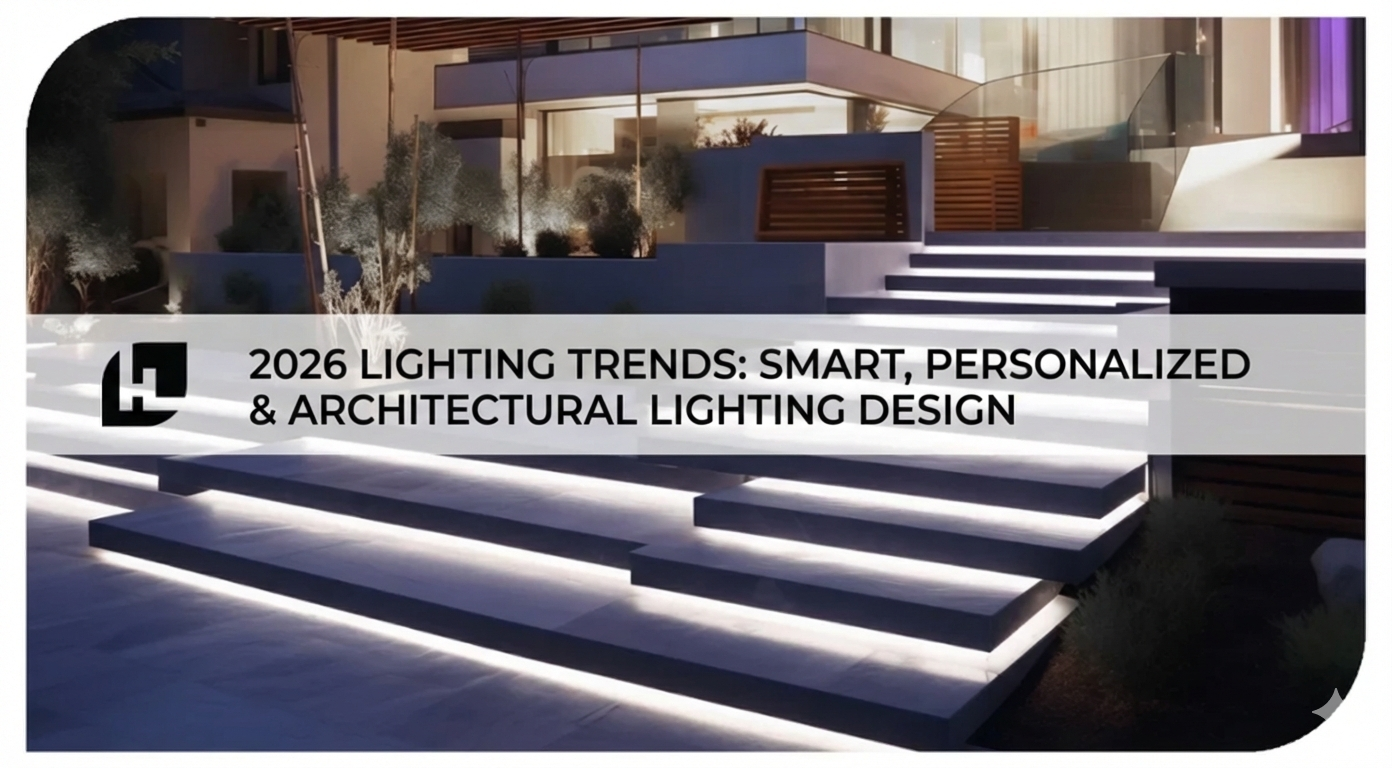
Lighting in 2026 is no longer about fixtures alone but also about experience, intelligence, wellness, and seamless design. As homes, offices, and cities evolve, lighting trends are shifting toward highly personalized systems, adaptive smart technologies, human-centric principles, sustainable materials, and hidden architectural integration.
This guide explores the five defining lighting trends of 2026, showing how innovations like LED strip light, smart controls, and integrated design are reshaping how we design spaces and how those choices impact comfort, efficiency, and aesthetics.
Personalization & Customized Lighting
Personalization is one of the most influential lighting trends in 2026, driven by the growing demand for custom-designed lighting solutions that fit specific spaces, aesthetics, and functional needs. Rather than selecting off-the-shelf products alone, customers increasingly want lighting systems tailored to their exact layout, usage, and design vision.
Why Custom Lighting Is Gaining Momentum
Standard lighting often falls short in real-world spaces with:
-
Unique room dimensions
-
Architectural features
-
Specific brightness or color requirements
-
Complex installations
Custom lighting design solves these challenges by delivering precision-fit solutions — especially when using flexible systems like LED strip light.
How Customers Request a Custom Lighting Design
Modern lighting brands now offer guided custom-project workflows that simplify the process for customers. A typical custom lighting request follows these steps:
1. Share Project Details
Customers start by submitting key information such as:
-
Space type (home, office, retail, outdoor, etc.)
-
Room dimensions or layout
-
Intended use (accent, task, ambient, architectural)
-
Preferred color temperature or lighting style
2. Define Lighting Goals
Next, customers outline what they want the lighting to achieve, such as:
-
Hidden architectural glow
-
Functional task lighting
-
Mood or ambience enhancement
-
Seamless integration into ceilings, cabinets, or furniture
This step ensures the lighting design supports both aesthetics and performance.
3. Custom Design & Product Selection
Lighting specialists then:
-
Recommend the appropriate LED strip light type
-
Select brightness levels, CRI, and color options
-
Specify power supplies, controls, and accessories
-
Design layouts optimized for uniform illumination and longevity
This eliminates guesswork and reduces installation errors.
Why custom lighting trend matters: As lighting becomes more integrated into architecture and daily life, customization ensures: Better visual comfort, improved energy efficiency, cleaner, lighting, lighting that truly fits the space — not the other way around.
The Rise of Smart & Adaptive Lighting
Smart LED Strip Light Integration
LED strip light is increasingly used in smart ecosystems because it:
-
Works seamlessly with motion sensors
-
Supports zoning and room-by-room automation
-
Integrates with voice control and apps
-
Provides low-profile illumination where traditional fixtures can’t
In 2026, strip lighting is often part of a connected lighting network, rather than a standalone feature.
Why this lighting trend matters:
Adaptive lighting improves energy efficiency, convenience, and usability, making it essential for smart homes, offices, hospitality spaces, and retail environments.
Human-Centric Lighting (HCL)
Human-centric lighting continues to shape 2026 lighting trends, driven by growing awareness of how light affects health, sleep, and productivity.
Lighting That Supports Circadian Rhythms
Human-centric lighting systems are designed to align with natural daylight cycles:
-
Morning: cooler, brighter light to boost alertness
-
Midday: balanced neutral tones for sustained focus
-
Evening: warmer, dimmer light to promote relaxation
This approach supports better sleep patterns, reduced eye strain, and improved mental well-being.
Applications Beyond the Office
In 2026, human-centric lighting is common in:
-
Homes and apartments
-
Healthcare facilities
-
Schools and universities
-
Co-working spaces
Tunable LED strip light is frequently used to deliver these transitions subtly, especially in indirect or hidden installations.
Why this trend is growing:
Lighting is increasingly viewed as a wellness tool, not just an infrastructure element.
Sustainable & Eco-Conscious Lighting Design
Sustainability is no longer optional; it’s a baseline expectation in 2026 lighting design.
Energy Efficiency as Standard
LED technology now delivers:
-
Higher lumens per watt
-
Longer lifespans
-
Lower heat output
-
Reduced energy consumption
LED strip light, in particular, offers high efficiency with minimal material usage, making it a sustainable choice for both accent and task lighting.
Eco-Conscious Materials & Design
Manufacturers are prioritizing:
-
Recyclable aluminum channels
-
Modular components for repair instead of replacement
-
Reduced packaging waste
-
Long-life drivers and power supplies
Smart lighting also contributes to sustainability by eliminating wasted energy through automation and scheduling.
Why this lighting trend dominates 2026:
Eco-friendly lighting reduces operational costs, supports environmental goals, and aligns with modern consumer values.
Hidden & Architectural Integration
One of the most visually striking lighting trends of 2026 is invisible light sources.
Lighting Without Visible Fixtures
Rather than showcasing lamps and fittings, designers are:
-
Concealing lighting within ceilings, walls, and furniture
-
Using indirect illumination to create depth and softness
-
Highlighting architectural lines instead of light sources
This approach creates clean, modern interiors while maintaining functional brightness.
LED Strip Light as the Foundation
LED strip light is the backbone of architectural lighting because it:
-
Fits into narrow channels and coves
-
Delivers even, continuous illumination
-
Disappears completely when installed correctly
-
Enhances spatial perception without clutter
Common applications include:
-
Ceiling coves
-
Staircases and handrails
-
Floating shelves
-
Headboards and wall panels
Why this trend defines 2026 aesthetics:
Hidden lighting creates calm, high-end environments while giving designers total control over mood and structure.
How These Lighting Trends Work Together
The most successful lighting designs in 2026 combine all five trends:
-
Personalization ensures comfort and emotional connection
-
Smart adaptation optimizes efficiency and usability
-
Human-centric principles support health and well-being
-
Sustainability reduces environmental impact
-
Architectural integration elevates visual design
LED strip light sits at the center of this evolution, acting as a flexible, efficient, and design-friendly solution across all categories.
Practical Applications by Space
Homes
-
Personalized lighting scenes for each room
-
Hidden LED strip light for modern aesthetics
-
Smart scheduling for energy savings
Offices
-
Human-centric lighting to improve productivity
-
Adaptive systems responding to occupancy
-
Architectural lighting for brand identity
Retail & Hospitality
-
Customized ambience to influence mood and behavior
-
Accent lighting to guide customer flow
-
Sustainable systems to reduce operating costs
Conclusion
The defining lighting trends of 2026 reflect a powerful shift: lighting is no longer just about design; it’s about intelligence, wellness, sustainability, and design harmony.
From personalized smart systems to human-centric strategies and hidden architectural integration, lighting has become a central element of how spaces feel and function. And with the continued evolution of LED strip light, designers and users alike now have unprecedented control over light itself.