
Table of Content
Introduction to COB and LED Lights
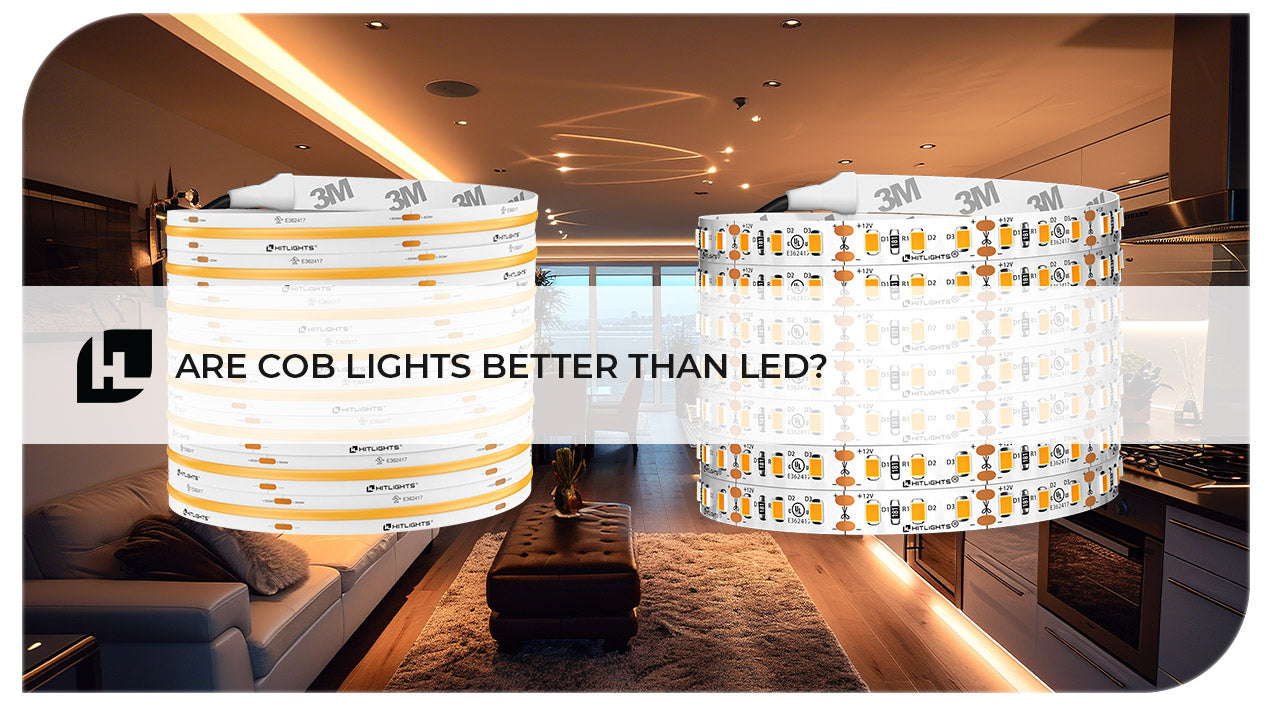
When discussing whether COB (Chip on Board) lights are better than traditional LEDs, it's important to clarify that COB is a technology used within the LED lighting spectrum. Both types involve LEDs, but they are designed and assembled differently, influencing their performance, applications, and suitability for different lighting environments and applications.
Understanding COB Lights
COB lights incorporate multiple LED chips bonded directly to a substrate to form a single module. This arrangement allows the light-emitting diodes to take up less space and provides a more concentrated light output with a greater lumen-per-watt ratio than traditional LEDs. The aesthetic appeal of COB is that it produces a more streamlined and seamless light beam, which is often favored in spotlights or track lighting.
Understanding Traditional LED Lights
Traditional LED lights typically consist of separate, distinct LEDs mounted on a panel, each with its own enclosure and often visible as individual points of light. This type can be more flexible in terms of design and customization. These LEDs are commonly used in applications where a diffuse light is preferred.

Comparison: COB vs. LED
Brightness and Light Quality
- COB LEDs: Offer a more intense, focused light from a single point, which can be beneficial for task lighting or focused illumination.
- Traditional LEDs: Provide a broader, more dispersed light, which is ideal for general ambient lighting.
Heat Dissipation
- COB LEDs: Due to the compact design, COB LEDs can get hotter than traditional LEDs; however, they typically integrate more efficient heat sinks.
- Traditional LEDs: Generally have better heat dissipation due to the space around individual LEDs, which allows for more air circulation.
Durability and Lifespan
- Both types of LEDs offer excellent durability and lifespan, often exceeding 50,000 hours of use. The difference may lie in the robustness of the assembly, with COB LEDs being less prone to individual LED failure. It is best to invest with UL listed COB and LED strip lights which have better durability and lifespan.
Energy Efficiency
- Both LED types are highly energy-efficient, but COB LEDs can sometimes edge out in efficiency due to their design minimizing energy lost as heat
Cost
- COB LEDs: Tend to be more expensive upfront due to the manufacturing process.
- Traditional LEDs: Are generally more cost efficient and more variable in price, depending on the configuration and specs.
- This variable is easier to manage when partnering with a factory direct supplier to get better deals and cutting-out the middleman markup in pricing..
Applications: Best Uses for COB and LED Lights
- COB LEDs: Best used where high intensity and focus are needed, such as in spotlights, automotive headlights, or in photographic lighting, and more.
- Traditional LEDs: Ideal for general room lighting, outdoor area lighting, and electronic devices where broad coverage and special space requirements.
Conclusion
Deciding if COB lights are better than traditional LEDs depends largely on the specific needs of the application. COB LEDs offer intense, focused light and a sleek design but come at a higher cost and slightly less effective heat dissipation.
Traditional LEDs, on the other hand, offer versatility and lower costs with adequate performance for most general lighting needs. Each has its strengths and ideal uses, making them complementary technologies within the broad and evolving LED market.
When choosing the right type of lighting, consider the specific requirements of your space and the qualities you most value in lighting solutions.
About HitLights:
HitLights is a leading provider of high-quality LED lighting and low voltage LED drivers, and mounting supplies catering to diverse needs in residential, commercial, and event settings. With a commitment to innovation, eco-friendly lighting, and customer satisfaction, HitLights continues to illuminate spaces with innovations be it micro or macro technology.
By the way, if you are a professional installer, an integrator, or a business owner and you want to: Save MORE! And Do MORE Projects!
Get Factory Direct Pricing when you join our Professional Partner Program RISK-FREE, NO CONTRACTS, NO HASSLE PROCESS there is nothing to lose but MORE to GAIN!
If you have any additional questions, feel free to reach out to us at customerservice@hitlights.com or give us a call at 1 (855) 768-4135. Our team of expert engineers and electricians are here to assist you every step of the way!
*Disclaimer: The information provided in this article is for general informational purposes only.