LED Lighting · Buyer's Guide
RGB vs. RGBW LED Strip Lights: How to Choose Multi-Color LED Strips and Kits
Multi-color LED strips let you change a room's entire mood from a single light source — shifting from a warm dinner-party glow to vibrant red, blue, or green on demand. The fastest way to choose the right product is to understand one core distinction: RGB LED strip lights mix red, green, and blue diodes to create color, while RGBW strips add a dedicated white chip for clean, usable white light. That single difference decides whether a strip is built for atmosphere, for everyday illumination, or for both. This guide breaks down RGB versus RGBW, the specs that actually matter, and how to assemble a complete kit that works on the first try.
What are multi-color LED strips, and how do they work?
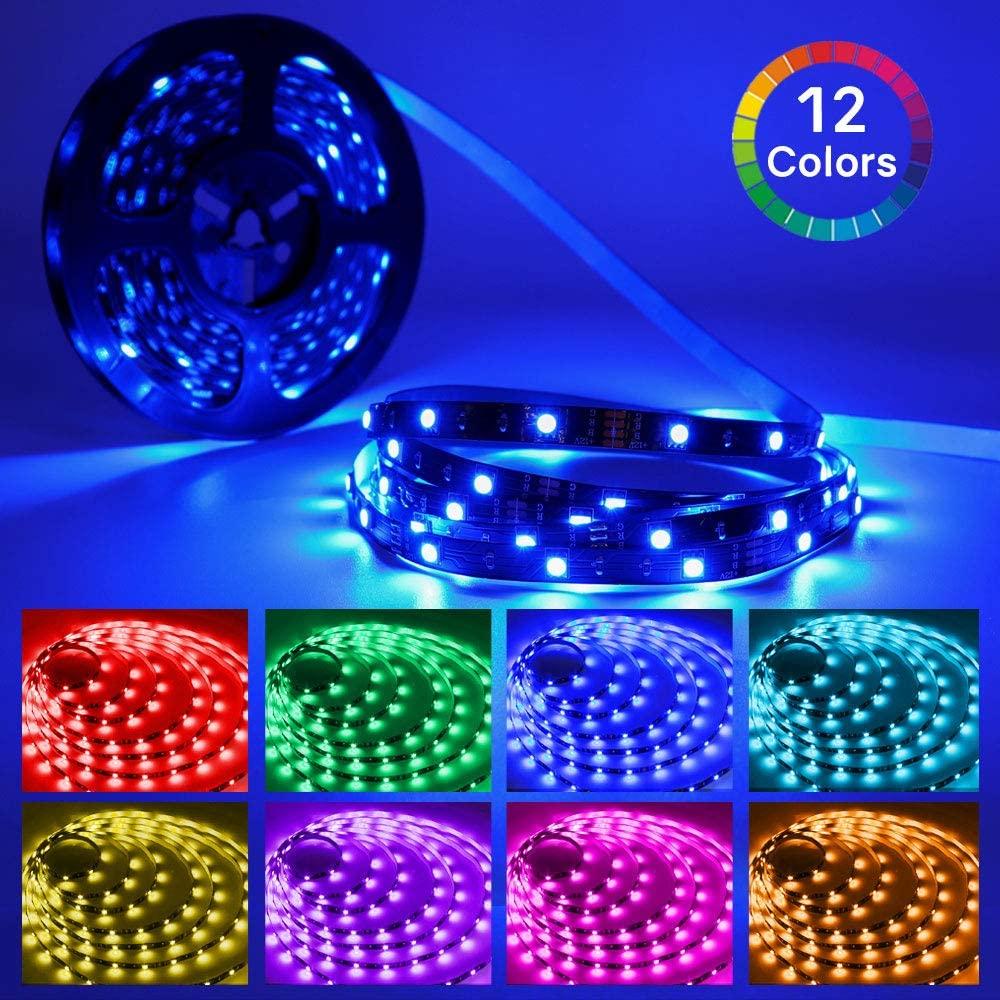
Multi-color LED strips are flexible circuit boards lined with color-changing diodes that you control through a dedicated controller and remote, app, or smart hub. Each "pixel" on a standard RGB strip contains red, green, and blue chips; by adjusting the brightness of each channel, the strip can reproduce millions of color combinations across the spectrum.
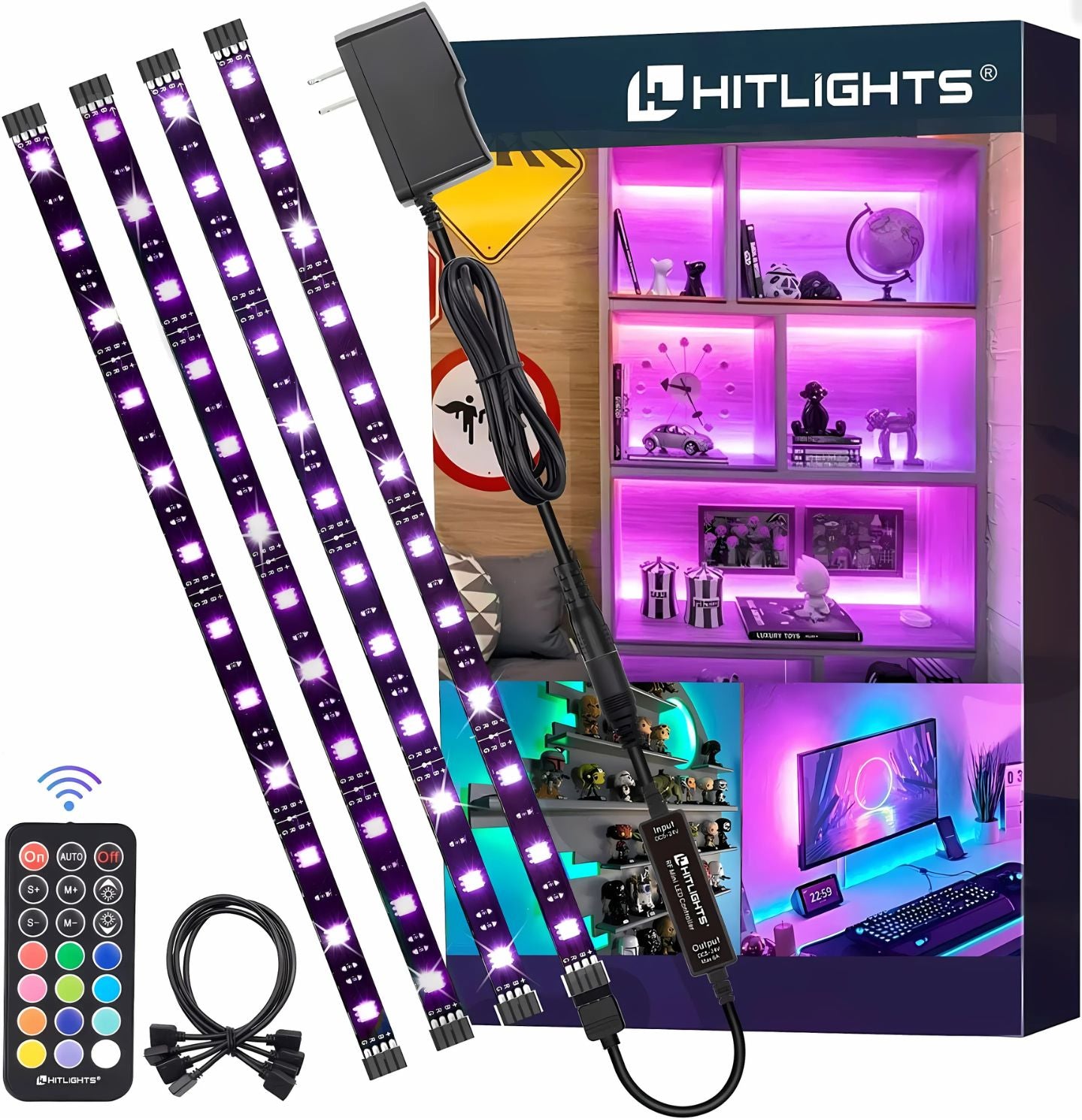
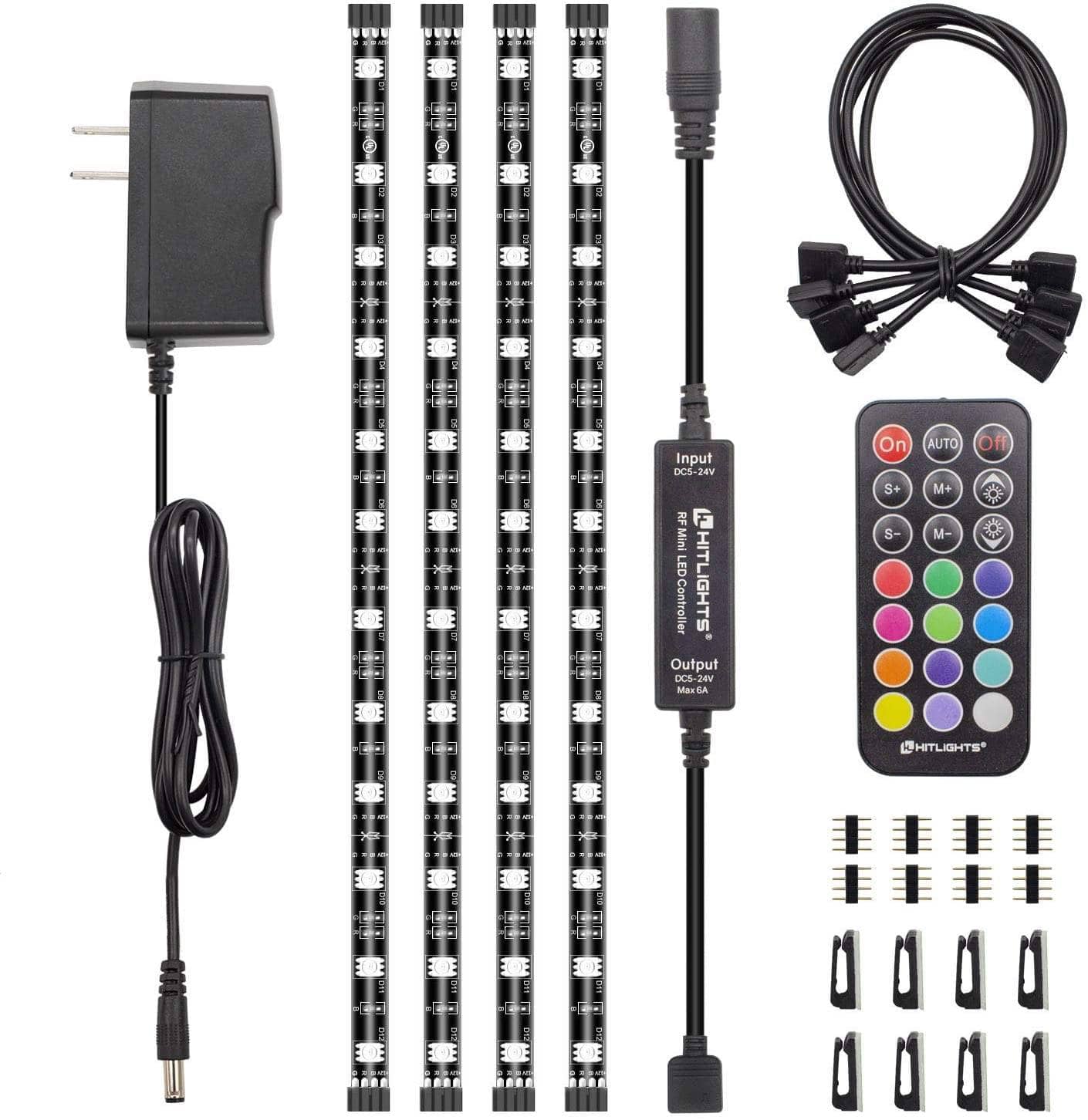
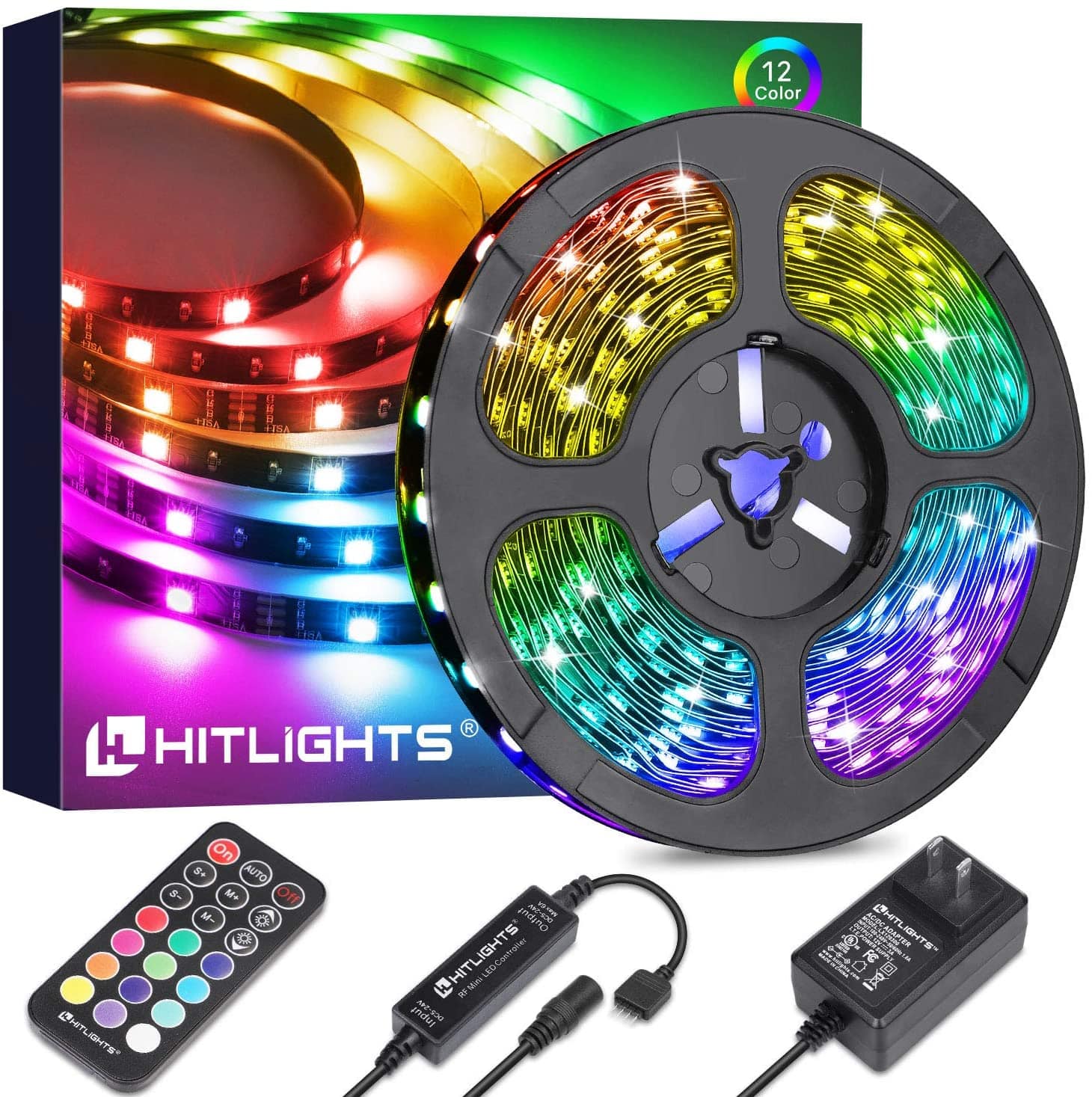
These strips run on low-voltage DC power — either 12V or 24V — fed by a power supply that converts your home's 120V wall current down to a safe, strip-friendly level. A multi-color strip is never a standalone product. A working installation needs four core components: a power supply, a controller (this is what makes the colors change), the strip itself, and connectors to join runs and turn corners. Skip any one of them and the system won't light up correctly.
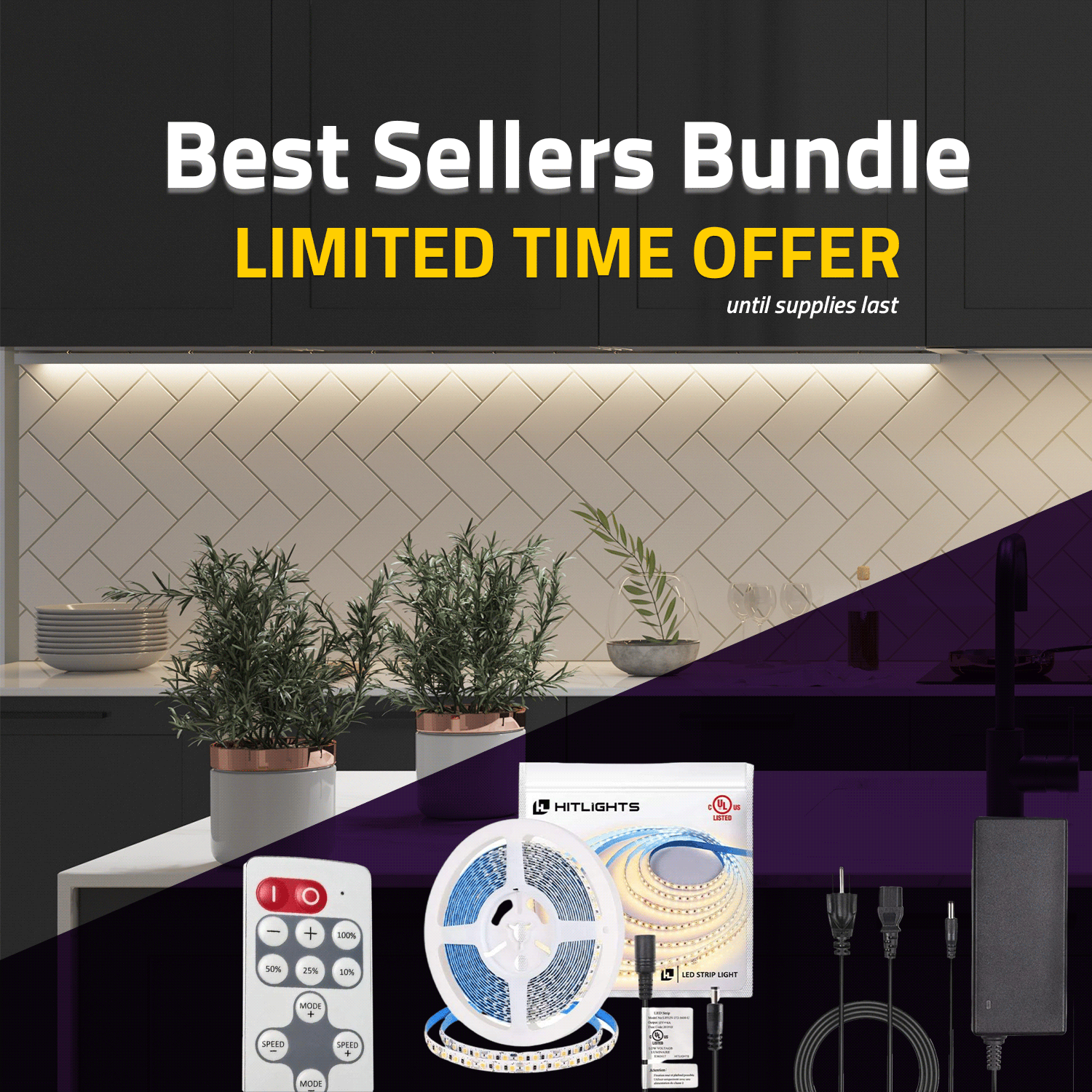
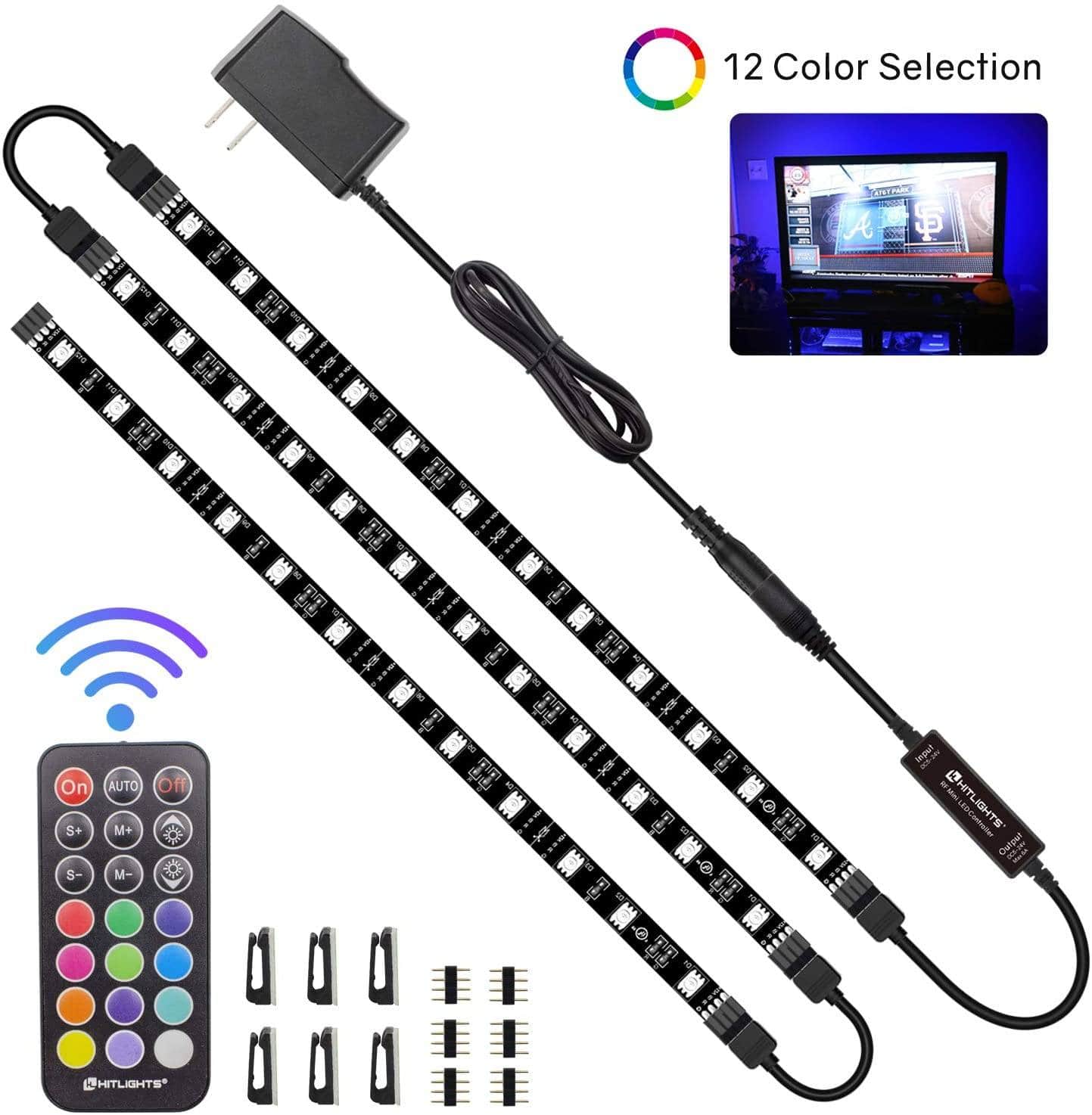
That four-part system is also why "kits" exist. A multi-color LED strip kit bundles the strip, controller, remote, and power adapter together so beginners aren't left guessing about compatibility. HitLights' Multi-Color LED Strips and Kits collection is organized around exactly this idea — strips for builders who already own a controller, and complete kits for first-time installs.
RGB vs. RGBW: what's the real difference?
The difference comes down to white light. RGB strips create white by blending red, green, and blue at full brightness, while RGBW strips include a separate white diode dedicated to producing clean, consistent white. RGB's mixed "white" tends to look slightly blue, purple, or uneven, which is fine for color effects but disappointing if you actually want to light a space.
Here's how to decide quickly:
- Choose RGB when the strip is purely decorative — accent lighting behind a TV, gaming setups, party and holiday color, cove lighting where you mostly want hues, not task light.
- Choose RGBW when you want both colorful effects and a genuine white you'd read or cook by — kitchens, living rooms, under-cabinet lighting, bedrooms, or any space that serves double duty.
RGBW costs a little more and uses a four-channel controller instead of a three-channel one, but it removes the single most common complaint about color-changing strips: that their white "isn't really white." If you only buy one multi-color strip for a primary living space, RGBW is usually the smarter long-term pick. For dedicated effect lighting where white doesn't matter, RGB delivers more color per dollar.
A quick note on "addressable" strips
Standard RGB and RGBW strips change the whole run to one color at a time. Addressable strips control each LED or small group individually, enabling chases, gradients, and animations. They're a different category with different controllers — powerful for entertainment and dynamic displays, but overkill for accent and ambient lighting. If you simply want a room that glows in any color you choose, standard RGB or RGBW is the right tool.
Which specs actually matter when buying multi-color LED strips?
Spec sheets are noisy. Five numbers tell you almost everything you need to know about how a multi-color strip will perform.
Voltage: 12V vs. 24V
Both 12V and 24V strips are common, and both are safe low-voltage systems. The practical difference is run length. 24V strips experience less voltage drop, so they hold consistent brightness over longer distances — up to roughly 65 feet on a single run, versus shorter limits for 12V before the far end starts to dim. For short accent runs under a cabinet or behind a monitor, 12V is perfectly fine and often cheaper. For long perimeter runs, ceilings, or whole-room cove lighting, 24V is the safer engineering choice.
IP rating: where can it go?
The IP rating tells you how protected the strip is against dust and water. Indoor strips are rated IP30 with no moisture protection. For damp or wet locations, look for IP65 (a gel-coated surface) or IP67 (fully encased in silicone) for true moisture resistance. Use IP30 indoors only; reserve IP65 and IP67 for kitchens near sinks, bathrooms, covered patios, and outdoor signage. Installing an indoor-only strip outside is the fastest way to ruin one.
Brightness, density, and cut points
Brightness on quality LED strips ranges widely — roughly 80 to 800 lumens per foot depending on LED density and intended use. Higher density also means more cut points: most strips can be trimmed every few LEDs (commonly every 3–6) along marked lines, then rejoined with solderless connectors. That cuttability is what lets a single roll wrap a complex cabinet or staircase cleanly.
Build quality and certifications
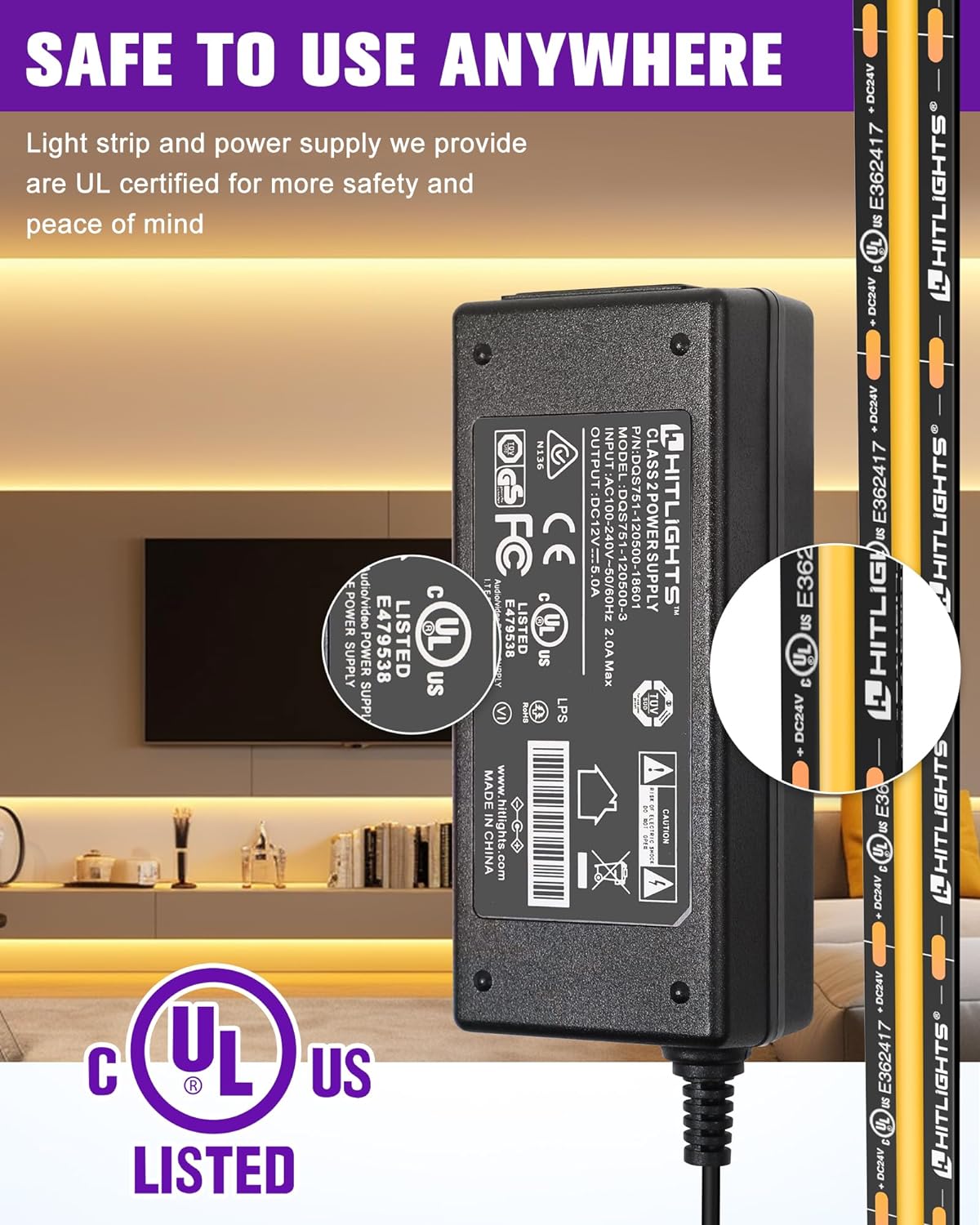
Cheap strips fail early, flicker, or shift color. Reputable multi-color strips use a sturdy flexible PCB, commercial-grade 3M adhesive backing, and carry safety certifications like UL listing and RoHS compliance. For any installation tied into your home — and especially anything a contractor signs off on — UL-listed components aren't optional; they're what keeps an inspection (and your insurance) clean.
How do I build a complete multi-color LED strip kit?
A reliable multi-color installation is a system of four matched parts. Get the matching right and setup takes an afternoon.
- Strip — Pick RGB or RGBW, your voltage (12V or 24V), and the correct IP rating for the location. Measure your run before buying, and add 10–15% for corners and trimming.
- Controller + remote — This must match the strip type. A four-channel RGBW controller is required for RGBW strips; a three-channel RGB controller won't drive the white channel. The controller is the piece that actually changes colors.
- Power supply — Match the voltage to the strip (a 24V strip needs a 24V supply), and size it for the load. A practical rule is to run a power supply at no more than 80% of its rated wattage for cooler operation and longer life. Browse compatible options in the HitLights transformers and power supplies collection.
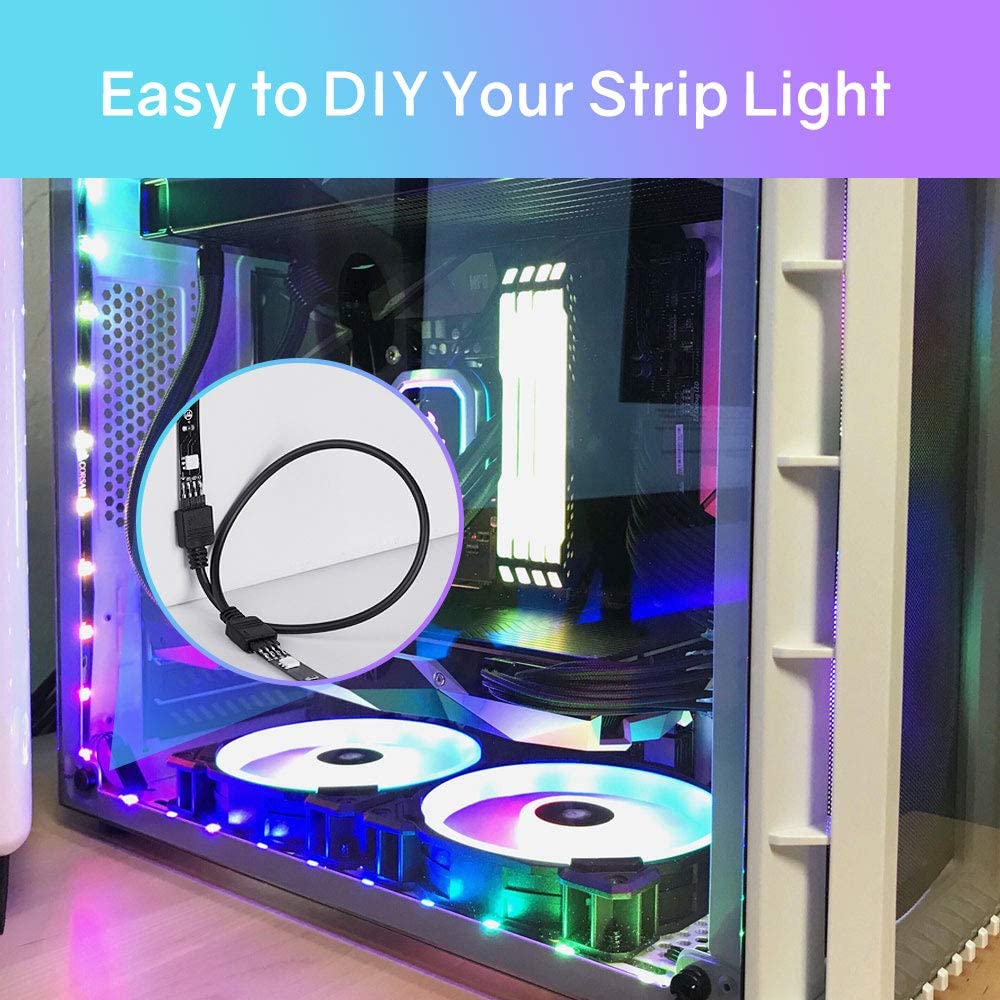
- Connectors and channels — Solderless connectors and accessories join runs and turn corners without tools, and an aluminum mounting channel improves heat dissipation and gives the finished install a clean, recessed look.
One important compatibility note: multi-color RGB and RGBW strips require a dedicated color controller, and are not compatible with single-color in-wall dimmer/driver units like the EZDim Pro, which are designed for constant-voltage single-color strips. Always pair multi-color strips with a multi-color controller.
If matching parts sounds like a lot to track, this is exactly where a pre-built kit earns its keep. A bundle like the RGB Eclipse pre-cut kit with remote or a 32.8 ft 5050 RGB color-changing roll ships with components already matched, so a first-time installer can plug in and go.
Where do multi-color LED strips work best?
Multi-color strips shine anywhere you want lighting to do more than one job:
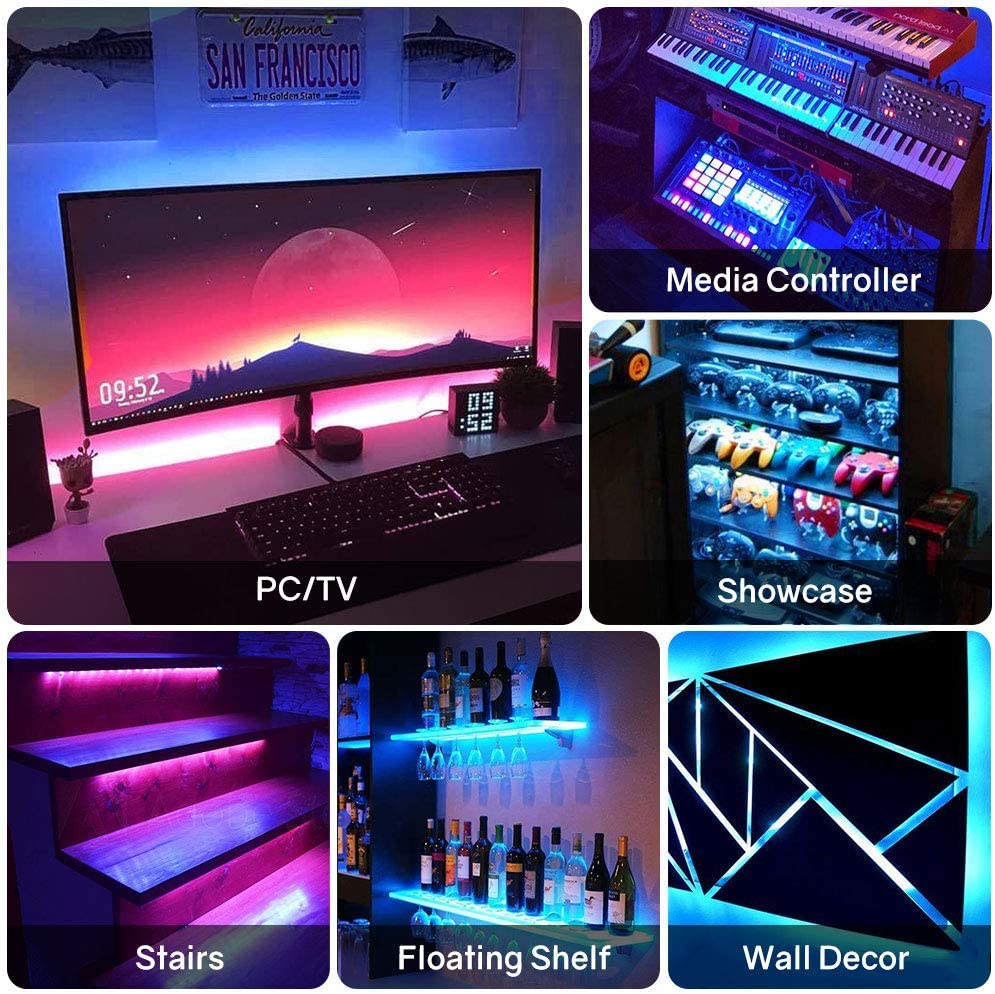
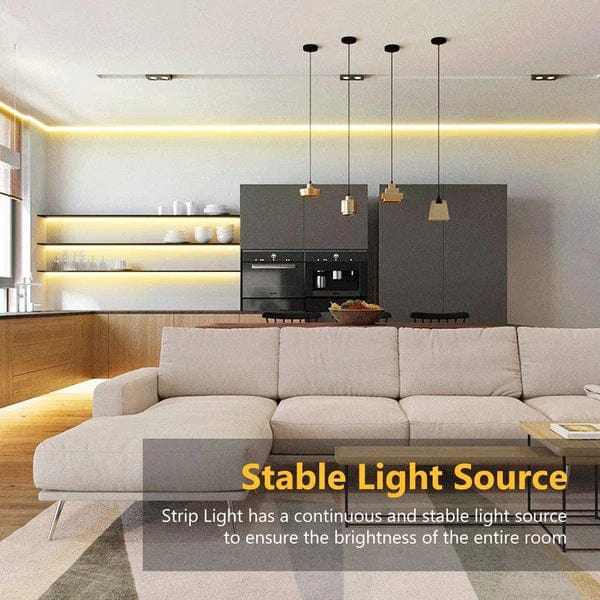
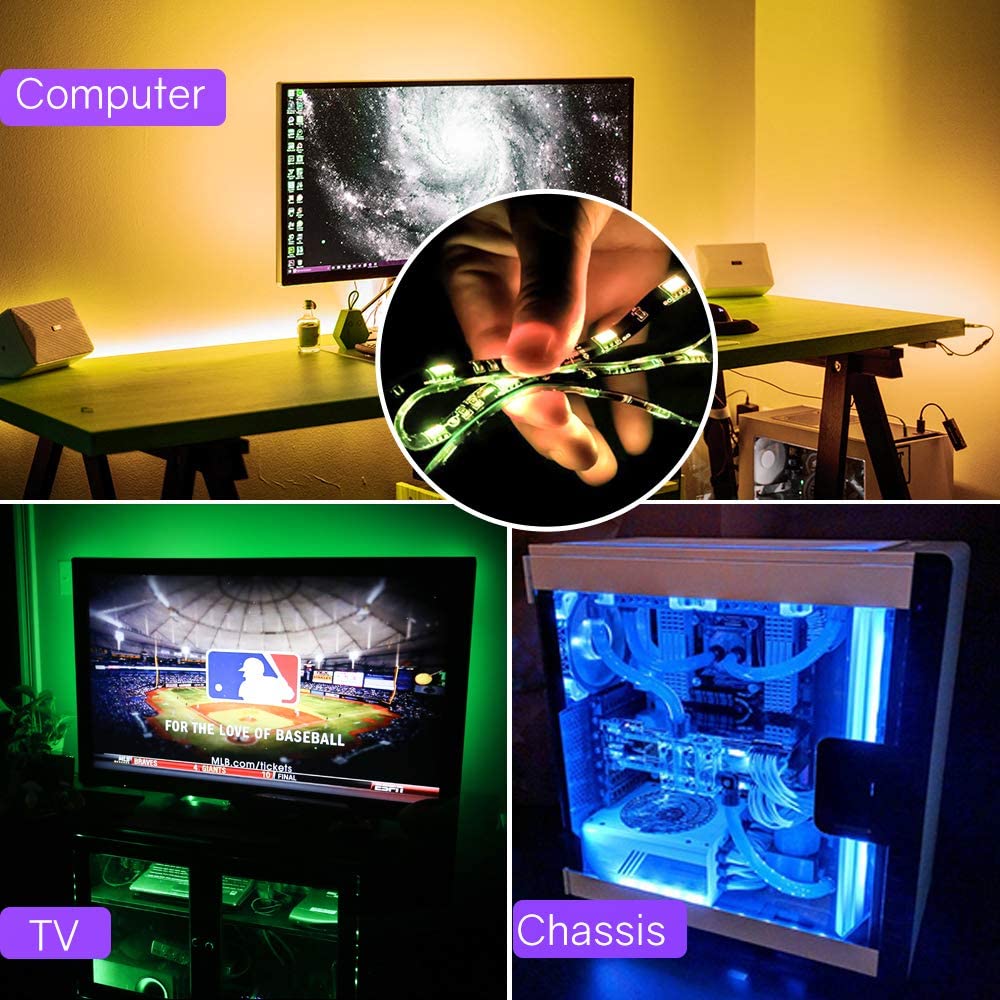
- Living rooms and media walls — bias lighting behind a TV reduces eye strain and adds depth; RGBW lets the same strip serve as soft white reading light.
- Kitchens — RGBW under-cabinet lighting gives crisp white for prep work and color for entertaining.
- Bedrooms and kids' rooms — warm color scenes for winding down, bright white when you need it.
- Gaming and home theaters — RGB color sync and accent lighting for immersion.
- Outdoor and covered spaces — IP65/IP67 strips for patios, decks, and signage that handle moisture.
Because LED strips draw far less power than traditional lighting — saving up to 80% of the energy of incandescent sources — running accent lighting around a room costs little even if it's on every evening.
Conclusion: matching the strip to the job
Choosing multi-color LED strips comes down to a short sequence of decisions. Pick RGB for pure color and effects, or RGBW when you also want true, usable white. Match your voltage to your run length (24V for long runs), your IP rating to the environment (IP30 indoors, IP65/IP67 for moisture), and your controller and power supply to the strip you've chosen. Insist on UL-listed, well-built components so the install lasts years rather than months.
Whether you want a single accent strip or a complete plug-and-go bundle, start from a curated, compatibility-checked range like the HitLights Multi-Color LED Strips and Kits collection. Get the four core components matched correctly the first time, and your color-changing lighting will look professional, perform reliably, and transform a space at the press of a button.
![RGBW CSP strip (UL-Listed) 16.4ft [IP30]](http://hitlights.com/cdn/shop/files/1_af9031fd-128e-4190-89fd-ec6210290eb2.jpg?v=1731047038&width=1080)
![RGBW CSP strip (UL-Listed) 16.4ft [IP30]](http://hitlights.com/cdn/shop/files/IP30-CSP-RGB_fab162da-ab60-4cb8-822e-a04d41bb823c.jpg?v=1731047037&width=1080)
![RGBW CSP strip (UL-Listed) 16.4ft [IP67]](http://hitlights.com/cdn/shop/files/1-1.jpg?v=1731047104&width=1080)
![RGBW CSP strip (UL-Listed) 16.4ft [IP67]](http://hitlights.com/cdn/shop/files/1_9e415e62-cdd4-4bca-9cef-f80af59d6cc8.jpg?v=1731047104&width=1080)
![RGB CSP Strip (UL-Listed) 16.4ft [IP67]](http://hitlights.com/cdn/shop/files/1_f140ec72-91f6-40a3-9093-fdce452fa805.jpg?v=1731046933&width=1080)
![RGB CSP Strip (UL-Listed) 16.4ft [IP67]](http://hitlights.com/cdn/shop/files/4_1.jpg?v=1731046933&width=1080)
![RGB CSP strip (UL-Listed) 16.4ft [IP30]](http://hitlights.com/cdn/shop/files/1_8211e4da-8cc3-49d7-a3e7-e2a1eeab859c.jpg?v=1731046846&width=1080)
![RGB CSP strip (UL-Listed) 16.4ft [IP30]](http://hitlights.com/cdn/shop/files/2_6249e9d7-e89e-491a-bd8d-f24deadedd88.jpg?v=1731046846&width=1080)