
Introduction
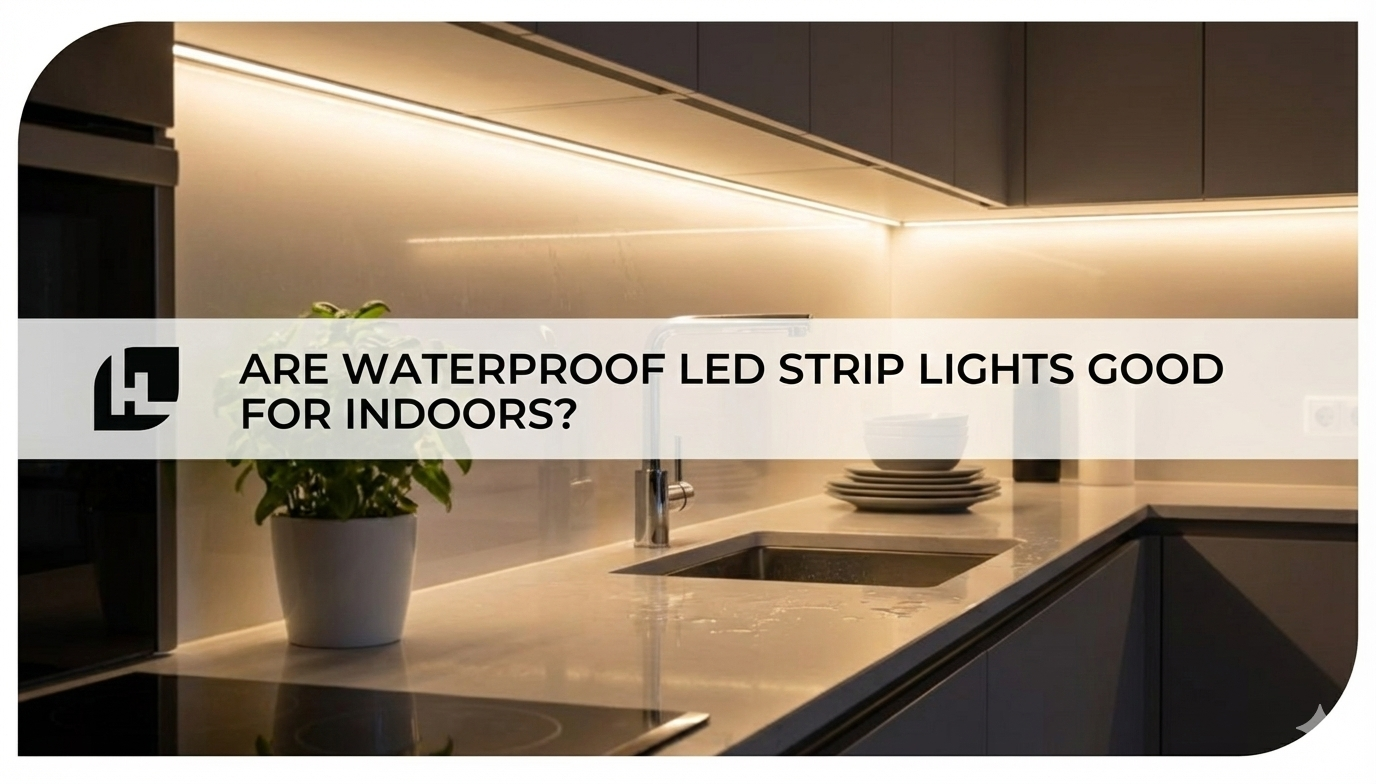
When choosing lighting for your home or commercial space, it’s common to wonder whether a waterproof LED strip light is suitable or even necessary for indoor use. Many buyers assume that “more protection is better,” but IP-rated strip lights come with design, performance, and installation differences that may not always benefit interior applications. This guide breaks down the advantages and disadvantages of using waterproof or water resistant LED strip lights indoors, helping you make the best lighting decision for any room.
Are Waterproof LED Strip Lights Good for Indoor Use? (Quick Answer)
Waterproof LED strip lights can be used indoors, but they’re not always the best choice.
They are thicker, less flexible, harder to install, and can trap heat compared to indoor LED strip lights designed without silicone or epoxy coatings.
If moisture and splashes are not a concern, non-waterproof indoor strips provide:
-
Better brightness
-
Easier installation
-
Improved heat dissipation
-
Longer lifespan
-
More customizable application options
Now let’s explore these details in depth.
What Makes a LED Strip Light “Waterproof”?
Waterproof or water-resistant LED strip lights typically come with an IP rating (Ingress Protection). The most common indoor/outdoor ratings include:
-
IP65: Water-resistant (light splashes)
-
IP67: Fully waterproof for temporary submersion
-
IP68: Waterproof for extended submersion
To achieve these ratings, manufacturers coat the LED strip with:
-
Silicone
-
Epoxy resin
-
Polyurethan
-
A PVC “jacket”
This protective layer shields diodes and circuitry from moisture, dust, and humidity—but it also changes how the strip behaves.
Main Question: Are There Disadvantages of Using Waterproof LED Strip Lights Indoors?
Yes—several. Many users assume waterproofing improves durability in all conditions, but inside a home or office, extra waterproofing often creates performance drawbacks that indoor-specific strips do not have.
Below are the primary disadvantages.
1. Reduced Brightness Because of the Silicone Coating
One of the biggest drawbacks of using waterproof LED strip lights indoors is light output reduction. The silicone or epoxy coating acts like a diffuser, lowering total lumen output by:
-
Softening the light
-
Slightly tinting the color temperature
-
Reducing beam angle clarity
Indoor LED strip lights without waterproof coatings deliver a cleaner, crisper, and more direct illumination, which is ideal for:
-
Under-cabinet lighting
-
Cove lighting
-
Behind TVs
-
Under shelves
-
Wall accents
-
Ceiling features
2. Poor Heat Dissipation (Which Can Shorten Lifespan)
LED chips naturally produce heat. In non-waterproof indoor LED strip lights, heat escapes easily because the strip is exposed.
But waterproof strips trap heat inside the silicone casing. This results in:
-
Higher operating temperatures
-
Decreased efficiency
-
Shorter LED lifespan
-
Potential color shift over time
3. Thicker Design Makes Waterproof Strips Less Flexible
Waterproof LED strip lights often have a “bulky” feel due to the protective layer. Because of this, they are:
-
Harder to bend around corners
-
Less suitable for tight spaces
-
More difficult to conceal
-
More visible when installed under shelves or furniture
Indoor LED strip lights, by contrast, are slim, flexible, and ideal for seamless, hidden lighting designs.
4. Strong Adhesive Required — and Sometimes Still Fails
The weight and thickness of waterproof strips mean their adhesive backing must work harder. Problems include:
-
Peeling from ceilings and walls
-
Sagging over time
-
The need for stronger adhesives or mounting clips
-
More time-consuming installation
5. More Difficult to Cut, Connect, or Customize
One major advantage of LED strip lighting is customizability. However:
Waterproof LED strip light casings add an extra step when you want to:
-
Cut the strip
-
Reconnect sections
-
Insert corner connectors
-
Attach solderless clips
6. Higher Cost Without Added Benefit Indoors
Waterproofing materials and construction cost more. But if the application doesn’t expose the strip to:
-
Water
-
Steam
-
Outdoor weather
-
High humidity
…then the additional expense provides no practical advantage indoors.
Most indoor LED strip lights are cheaper, and they typically outperform waterproof strips in standard indoor environments.
7. Slight Color Shifts Due to Silicone Aging
Over time, silicone coverings may:
-
Yellow
-
Cloud
-
Harden
-
Lose clarity
This can affect color consistency, especially in spaces where accurate lighting is important, such as:
-
Retail lighting
-
Photography setups
-
Home décor
-
Display cabinets
Non-waterproof indoor strips maintain stable color and clarity for much longer.
8. Heavier and Harder to Hide in Minimalist Designs
Interior lighting trends lean heavily toward invisible, minimalist lighting. Waterproof strips are:
-
Thicker
-
Heavier
-
More noticeable
-
Harder to tuck cleanly under cabinetry or trim
Interior LED strip lights are thin and elegant, blending seamlessly into modern design.
When Waterproof LED Strip Lights Are Helpful Indoors
Despite the disadvantages, there are some indoor applications where waterproof or water-resistant LED strip lights are appropriate, including:
High-Moisture Indoor Areas
-
Bathrooms
-
Shower niches (must be properly IP-rated)
-
Laundry rooms
-
Indoor pools
-
Saunas or steam rooms
High-Traffic or Contact Areas
Waterproof strips work well in areas where the lights may be touched, bumped, or exposed to cleaning sprays.
Industrial or Commercial Settings
Workshops, warehouses, food prep zones, and commercial kitchens often require durable, sealed lighting.
Best Practices for Choosing Between Waterproof and Indoor LED Strip Lights
To make the right choice, consider:
1. Environment
Is the space dry and temperature-controlled?
→ Use indoor LED strip lights.
2. Lighting Purpose
Need accent lighting, under-cabinet lighting, or cove lighting?
→ Indoor strips provide better brightness and design flexibility.
3. Humidity Levels
Regular steam or direct water exposure?
→ Choose water-resistant LED strip lights with the appropriate IP rating.
4. Installation Complexity
If you want a fast, clean installation with easy adjustments, non-waterproof is better.
5. Budget
Waterproof strips cost more but do not improve performance indoors unless necessary.
Comparison Table: Waterproof vs. Indoor LED Strip Lights
|
Feature |
Waterproof LED Strip Light |
Indoor LED Strip Lights |
|
Brightness |
Lower (due to coating) |
Higher, clearer |
|
Heat Dissipation |
Poor |
Excellent |
|
Flexibility |
Moderate |
High |
|
Installation |
More complex |
Very easy |
|
Cutting/Connecting |
Harder |
Simple |
|
Price |
Higher |
Lower |
|
Moisture Resistance |
High |
Low |
|
Ideal Use |
Bathrooms, kitchens, outdoors |
Living rooms, bedrooms, shelves, ceilings |
Conclusion
Using a waterproof LED strip light indoors is possible, but not always recommended. For most interior applications, non-waterproof indoor LED strip lights provide better brightness, flexibility, longevity, and installation ease.
Waterproof strips only make sense in areas exposed to moisture, cleaning sprays, or physical impact. By understanding the disadvantages, such as reduced brightness, heat buildup, decreased flexibility, and higher cost, you can choose the best strip light type for your specific indoor project.
If the space is dry and controlled, choose non-waterproof indoor LED strip lights for the best performance and aesthetics.