
- Why Lighting Matters in the Food Industry
- Key Benefits of Proper Food Industry Lighting
- Best Lighting Options for Food Production and Processing
- Best Lighting for Restaurants, Cafés, and Food Displays
- Lighting Considerations for Food Safety and Quality
- Conclusion: Choosing the Right Lighting Strategy
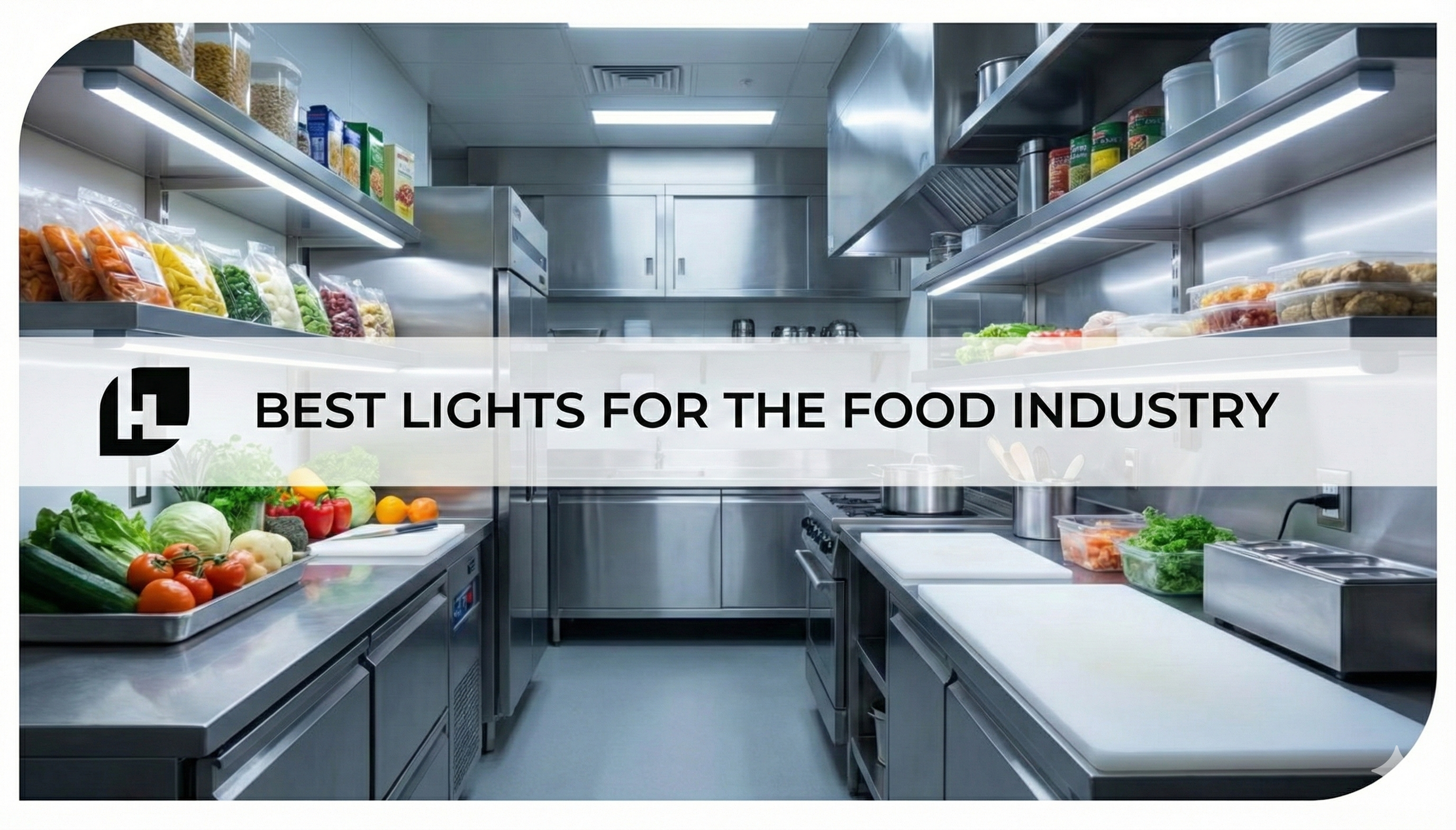
Lighting in the food industry is far more than just lighting, it’s a critical factor influencing food quality, safety, and consumer perception. The right lighting not only enhances the appearance of food but also supports compliance with food safety standards, improves employee productivity, and shapes customer experiences in restaurants and retail settings.
Why Lighting Matters in the Food Industry
Lighting in the food industry serves three main purposes: enhancing visual appeal, ensuring food safety, and creating the right atmosphere. Whether it’s a commercial kitchen, a bakery, a meat processing plant, or a restaurant dining room, lighting directly impacts both food presentation and operational efficiency.
In production environments, lighting supports quality control and sanitation. In retail and dining spaces, it shapes how consumers perceive freshness and flavor. For this reason, lighting is not a “one-size-fits-all” solution; it must be tailored to each environment.
Key Benefits of Proper Food Industry Lighting
1. Visual Appeal and Customer Perception
Good lighting can make food look more appetizing, colorful, and fresh. For example:
-
Warm lighting (around 2700–3000K) enhances the natural tones of cooked foods like meats, pastries, and breads.
-
Cooler lighting (4000–5000K) is better suited for areas displaying seafood, produce, or dairy, as it emphasizes cleanliness and freshness.
Studies have shown that lighting influences purchasing decisions, with customers more likely to buy food that appears fresh and vibrant under the right light temperature and intensity.
2. Food Safety and Quality Assurance
In food processing and storage areas, adequate lighting is critical for hygiene, inspection, and compliance. Properly lit environments allow staff to:
-
Detect contaminants or spoilage early
-
Perform accurate visual inspections
-
Maintain high safety and sanitation standards
Moreover, lighting systems used in these settings must be shatterproof, sealed against moisture, and compliant with HACCP (Hazard Analysis and Critical Control Point) requirements.
3. Energy Efficiency and Sustainability
With sustainability at the forefront of the food industry, energy-efficient lighting solutions like LEDs significantly reduce operational costs and carbon emissions.
-
LEDs consume up to 70% less energy than fluorescent or halogen options.
-
Their low heat output prevents unnecessary temperature fluctuations in food storage and display areas.
-
Longer lifespans (up to 50,000 hours) reduce maintenance and replacement costs.
Energy-efficient lighting also contributes to LEED certification and supports corporate sustainability goals.
Best Lighting Options for Food Production and Processing
In production environments, from bakeries to meatpacking facilities, lighting must deliver brightness, uniformity, and safety. Below are the most effective options:
1. LED Lighting (Recommended)
LED lights are the gold standard in food production environments. They offer:
-
High efficiency: Low energy use and reduced maintenance costs.
-
Low heat emission: Prevents food spoilage and keeps environments comfortable.
-
No UV or IR radiation: Minimizes product degradation.
-
Customizable color rendering: Ensures accurate product inspection and color consistency.
Best for: Processing lines, cold storage, packaging areas, and warehouses.
2. Fluorescent Lighting
Although being gradually replaced by LEDs, fluorescent lighting still serves many food production facilities. It provides:
-
Good color rendering (CRI 80+) for visual inspections.
-
Even illumination across work areas.
-
Cost-effective initial setup.
However, fluorescents can flicker, contain mercury, and have shorter lifespans, making them less ideal for long-term sustainability.
Best for: Legacy facilities or transitional lighting upgrades.
3. High-Bay and IP-Rated Fixtures
For large-scale food factories or storage warehouses, high-bay LED fixtures provide powerful, uniform lighting at high ceilings. Ensure fixtures carry IP65 or IP69K ratings, meaning they’re:
-
Dust-tight and water-resistant
-
Easy to clean and sanitize
-
Compliant with food safety standards
Best for: Meat processing plants, beverage facilities, and cold storage rooms.
Best Lighting for Restaurants, Cafés, and Food Displays
In customer-facing environments, lighting serves both functional and aesthetic purposes. It sets the mood, enhances food presentation, and influences brand perception.
1. Halogen Lighting
Halogen bulbs deliver a warm, inviting glow (2700–3200K) and excellent color rendering (CRI 95+), making them ideal for highlighting dishes and décor.
However, they are less energy-efficient and generate more heat than LEDs.
Best for: Fine dining restaurants, bakeries, and boutique cafés that prioritize ambiance.
2. LED Track and Spot Lighting
LED track lighting is perfect for restaurants and food courts that need flexible, directional lighting. It allows you to:
-
Focus on menu boards, tables, or displays
-
Change lighting angles as layouts evolve
-
Save energy with dimmable and smart controls
Best for: Restaurants, delis, grocery stores, and buffet counters.
3. LED Strip and Accent Lighting
LED strip lights are increasingly popular for display cases, counters, and shelving. Their flexibility allows for creative design and accentuation of textures and colors.
-
Ideal for refrigerated showcases, since they emit minimal heat.
-
Available in different color temperatures to match product type.
Best for: Pastry cases, salad bars, beverage stations, and refrigerated displays.
4. Smart and Tunable Lighting Systems
Modern food establishments are adopting smart lighting that adjusts intensity and color temperature throughout the day — mimicking natural daylight or shifting to warmer tones during dinner hours.
These systems:
-
Reduce energy waste
-
Enhance customer comfort
-
Maintain consistent food presentation across different times of day
Best for: Upscale restaurants, hotel dining rooms, and retail chains.
Lighting Considerations for Food Safety and Quality
Lighting directly affects food integrity and operational compliance. Here are essential factors to consider when selecting fixtures and systems.
1. Color Temperature and Rendering (CRI)
-
Cool white (4000–5000K): Ideal for production areas and food prep zones.
-
Warm white (2700–3500K): Best for dining and presentation areas.
-
High CRI (90+): Ensures accurate color perception, critical for fresh produce, meats, and bakery products.
2. Avoiding UV and IR Emissions
Lighting that emits ultraviolet (UV) or infrared (IR) radiation can:
-
Accelerate spoilage
-
Cause discoloration in meats and dairy
-
Alter texture or nutrient content
LED lights are preferred because they emit virtually no UV or IR radiation, ensuring food stays visually and physically intact.
3. Compliance and Safety Standards
Always choose fixtures that meet food safety and hygiene certifications, including:
-
NSF Certified (suitable for food zone installations)
-
IP65/IP69 K-rated (resistant to dust, moisture, and washdowns)
-
Shatterproof lenses to prevent contamination
Regular cleaning and maintenance also ensure that lighting remains bright, efficient, and compliant with HACCP and FDA requirements.
Conclusion: Choosing the Right Lighting Strategy
The best lights for the food industry strike a balance between aesthetic appeal, functionality, and safety.
-
LED lighting stands out as the most versatile, sustainable, and cost-effective choice for both production and presentation environments.
-
Halogen and fluorescent options may still have niche uses, but are gradually being replaced by smarter, more efficient LED systems.
Always consider color temperature, CRI, UV emission, and fixture rating when designing your lighting plan.