
Introduction: Why COB LED Strip Lights Are Revolutionizing Lighting Design
Lighting has evolved far beyond simple bulbs and fixtures. Today, COB LED strip lights — short for Chip-on-Board LEDs — are transforming how homeowners, businesses, and designers illuminate their spaces. These next-generation lights deliver seamless, high-density illumination without the “dotting” effect of traditional LED strips. Whether you’re enhancing your kitchen, retail displays, or architectural accents, COB lighting technology offers unparalleled performance and design flexibility.
In this guide, we’ll explain exactly what COB LED strip lights are, how they differ from SMD LED strips, their benefits, applications, and tips for choosing and installing them — so you can make the most of this powerful lighting innovation.
What Are COB LED Strip Lights? (Quick Definition)
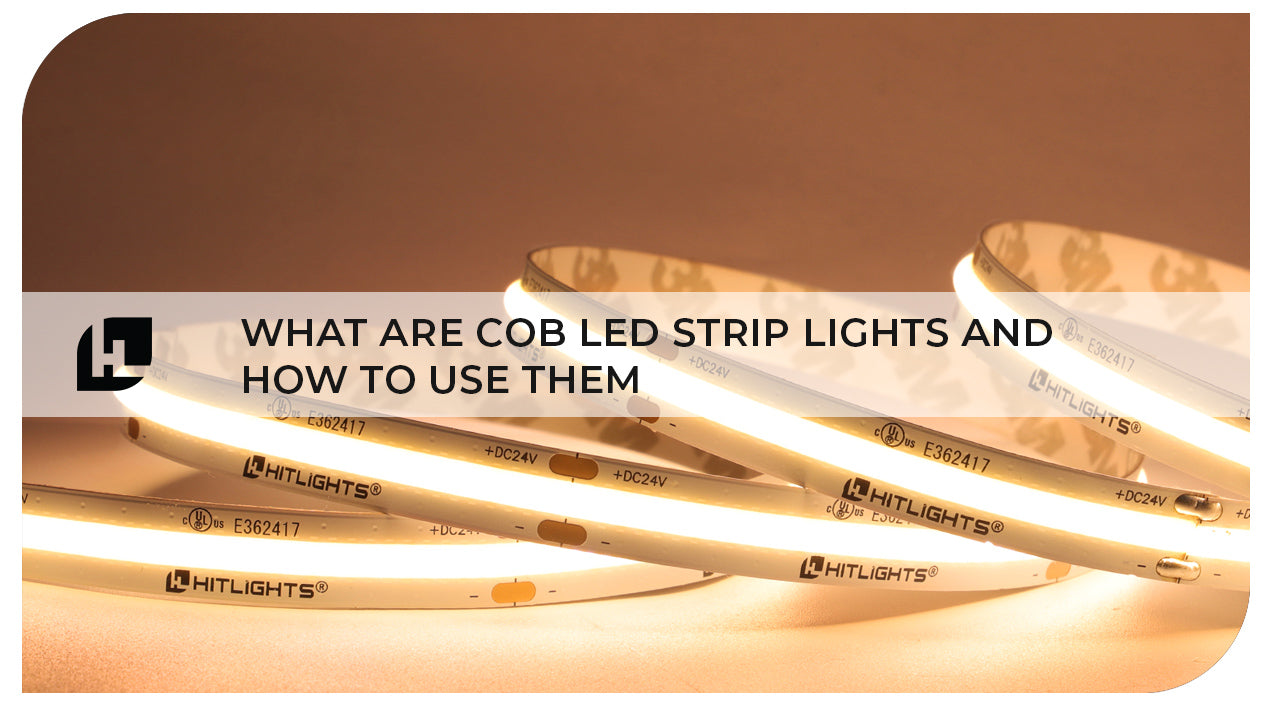
COB LED strip lights use Chip-on-Board (COB) technology, where multiple LED chips are directly mounted onto a single circuit board. This creates a continuous, uniform line of light rather than visible points of light seen in older LED strip designs.
Key features of COB LED strips:
-
Dense LED arrangement: Hundreds of chips packed closely together.
-
No visible hotspots: Produces smooth, “neon-like” illumination.
-
Higher efficiency: Lower heat output and improved light quality.
-
Flexible design: Can be cut and bent for custom installations.
💡 Featured Snippet Ready Answer:
COB LED strip lights are flexible lighting strips that use Chip-on-Board technology to deliver seamless, uniform illumination with higher efficiency and no visible LED hotspots.
How COB LED Strip Lights Work
Unlike standard SMD LED strips, which space individual LED diodes apart, COB strips integrate dozens of tiny LED chips directly onto a circuit board. A continuous phosphor layer diffuses the light, eliminating gaps and producing a consistent beam.
This design not only improves aesthetics but also enhances performance:
-
Better thermal management → longer lifespan.
-
Higher light density → brighter, more uniform output.
-
Energy savings → lower wattage for equivalent brightness.
This technology is ideal for applications where smooth, professional-looking illumination is essential — like under-cabinet lighting, retail shelving, or luxury car interiors.
COB vs SMD LED Strips: What’s the Difference?
When shopping for LED strip lights, you’ll often see two main types: SMD (Surface-Mounted Device) and COB (Chip-on-Board). Here’s how they compare:
| Feature | COB LED Strip Lights | SMD LED Strip Lights |
|---|---|---|
| Light Appearance | Smooth, continuous glow | Individual LED dots visible |
| Density | Hundreds of chips per meter | Fewer diodes per meter |
| Efficiency | Higher luminous efficacy | Lower luminous efficacy |
| Flexibility | More flexible, easier to bend | Less flexible |
| Applications | Premium, seamless lighting | General-purpose lighting |
💡 Quick Takeaway:
COB LED strips deliver a more seamless, professional light than SMD strips, making them ideal for visible installations where aesthetics matter.
Benefits of COB LED Strip Lights
1. Seamless, Dot-Free Illumination
COB strips are the go-to choice when you need a clean, neon-like effect with no visible light dots. This is especially valuable in high-end residential, hospitality, or retail settings.
2. Higher Energy Efficiency
Thanks to improved chip density and thermal management, COB strips consume less power for the same brightness compared to traditional SMD LED strips.
3. Longer Lifespan
Lower operating temperatures reduce stress on the LEDs, giving COB strips up to 50,000 hours of life under proper use.
4. Superior Flexibility
With more chips per meter and a thinner profile, COB strips can bend around curves and corners more easily — perfect for architectural lighting designs.
5. Better Color Consistency
The phosphor layer on COB strips ensures uniform color rendering across the entire strip, ideal for spaces where color accuracy matters.
Top Applications for COB LED Strip Lights
Because of their flexibility and aesthetic appeal, COB LED strips excel in multiple use cases:
-
Under-cabinet lighting in kitchens and bathrooms
-
Retail displays & product shelving for highlighting merchandise
-
Architectural accents (coves, staircases, moldings)
-
Workspaces for glare-free task lighting
-
Vehicles and marine lighting where space is tight but bright light is needed
-
Signage and commercial installations for a premium look
By offering smooth, uninterrupted light, COB strips elevate the look and feel of any environment.
How to Choose the Right COB LED Strip Lights
When selecting COB LED strips, consider:
-
Brightness (Lumens per Foot): Match brightness to your application (task lighting vs ambient).
-
Color Temperature: Choose from warm white (2700K) for cozy settings to cool white (6000K) for workspaces.
-
Voltage & Wattage: Common options include 12V and 24V; ensure compatibility with your power supply.
-
CRI (Color Rendering Index): Higher CRI (90+) gives truer colors.
-
IP Rating: For outdoor or damp areas, pick IP65 or higher.
How to Install COB LED Strip Lights (Step-by-Step)
Installing COB LED strips is straightforward with a few tools:
-
Measure & Plan: Determine your layout and cut the strip to the required length at marked cut points.
-
Prepare the Surface: Clean and dry the installation area for better adhesion.
-
Peel & Stick: Most COB strips come with a 3M adhesive backing for easy mounting.
-
Connect to Power: Use the appropriate power supply (driver/transformer) and follow polarity markings.
-
Optional Diffusers: For an even softer look, install in aluminum channels with diffusers.
💡 Pro Tip: Always test the strip before final installation to ensure the polarity and brightness are correct.
COB LED Strip Light Maintenance Tips
-
Avoid overdriving the LEDs — use the recommended voltage.
-
Ensure adequate ventilation — especially for high-wattage runs.
-
Check connections periodically — loose wiring can cause flickering.
-
Use quality power supplies — cheap drivers can shorten lifespan.
These steps will help maximize the performance and longevity of your lighting investment.
COB LED Strip Lights: The Future of Flexible Lighting
COB LED strip lights are more than just another LED product — they’re the next stage in seamless, energy-efficient, and flexible lighting design. With better performance, superior aesthetics, and longer lifespans, COB strips outperform traditional SMD LED strips in almost every category.
Whether you’re an interior designer, DIY enthusiast, or contractor, upgrading to COB LED strip lights will give your projects a modern, professional finish.
FAQs
What are COB LED strip lights?
COB LED strip lights are flexible lighting strips that use Chip-on-Board (COB) technology, where multiple LED chips are mounted closely together on a circuit board. This creates a seamless, uniform line of light without the visible “dots” of traditional LED strips.
How are COB LED strip lights different from SMD LED strips?
The key difference is in light appearance. COB LED strips provide a smooth, continuous glow, while SMD LED strips show individual light points. COB strips are also more efficient, flexible, and ideal for applications where aesthetics and seamless illumination are important.
What are the main benefits of COB LED strip lights?
Seamless, dot-free illumination
Higher energy efficiency
Longer lifespan (up to 50,000 hours)
Superior flexibility for curved installations
Better color consistency across the strip
Where can COB LED strip lights be used?
Under-cabinet lighting in kitchens and bathrooms
Retail displays and shelving
Architectural accents like coves and staircases
Workspaces for glare-free task lighting
Vehicles, boats, and signage installations
How do you install COB LED strip lights?
Measure and cut the strip at marked points.
Clean the surface for adhesion.
Peel and stick the strip into place.
Connect to a compatible power supply.
(Optional) Use aluminum channels with diffusers for a softer finish.