
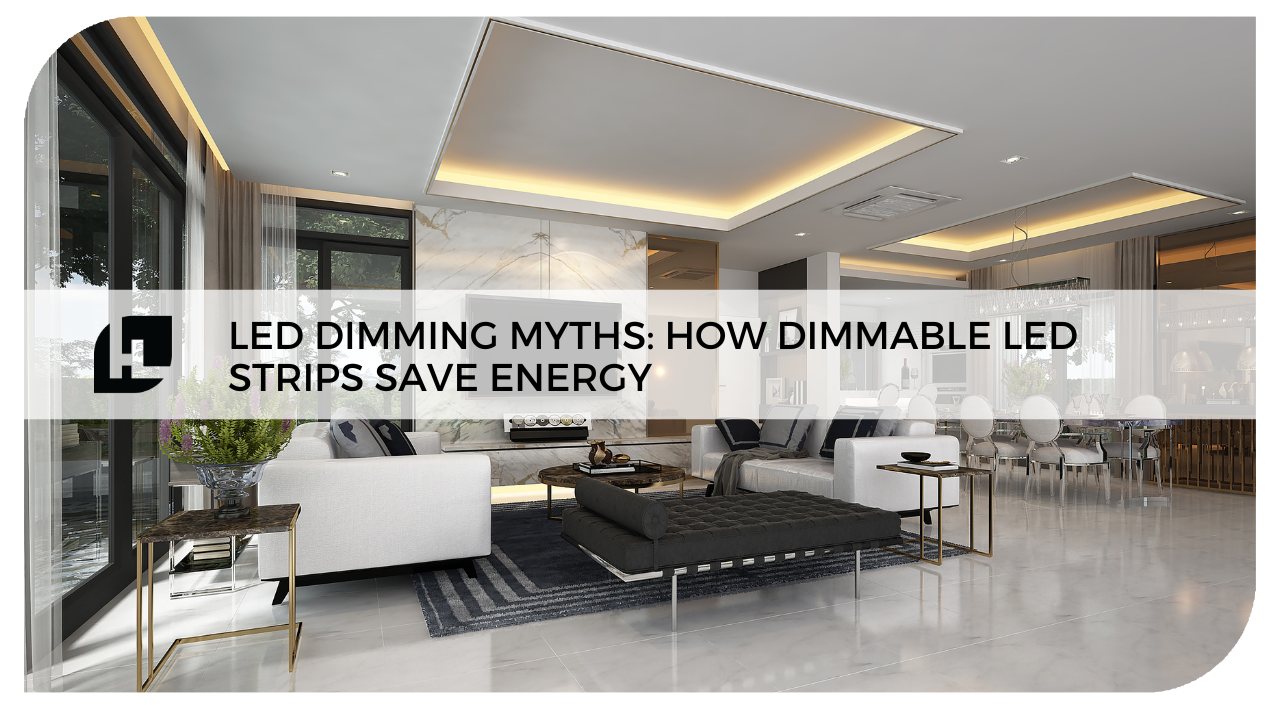
In recent years, LED strip lights have emerged as one of the most popular lighting solutions for both residential and commercial settings. With their sleek design, customizable length, and vibrant color output, it’s easy to see why they’ve become the go-to option for modern lighting. A major appeal of these fixtures lies in their dimmable capabilities, but despite the benefits, several myths persist about how dimming affects energy usage and overall lighting performance.
How Dimmable LED Strips Actually Work
To understand the impact of dimming on energy use, we first need to grasp how dimmable LED strips function.
Most dimmable LED systems rely on either Pulse Width Modulation (PWM) or constant current reduction to adjust brightness levels:
-
PWM works by rapidly turning the LED on and off at a frequency too fast for the human eye to detect. The longer the “on” duration in each cycle, the brighter the light appears.
-
Constant current dimming, on the other hand, reduces the current flowing to the LED, directly lowering its light output.
Both methods result in reduced power consumption when dimmed. Unlike traditional incandescent bulbs that still draw considerable power even when dimmed, LED strip lights are far more efficient, scaling their energy usage with the brightness level.
The Truth About Energy Consumption When Dimming LEDs
A widespread misconception is that dimming LED lights doesn't actually save energy, or worse, it could cause them to draw more power. This belief likely stems from older lighting technologies or poorly matched dimming systems in the past.
In reality, when dimmable LED strips are set to a lower brightness level, they consume significantly less electricity. Here’s how:
-
A 12V LED strip running at 100% brightness may draw around 4.8 watts per meter.
When dimmed to 50%, power usage may drop to 2.4 watts per meter or lower.
This power scaling is especially efficient in PWM-based systems, where brightness is reduced without voltage loss. Over time, this reduced power draw translates into real energy savings, especially in homes or commercial spaces where lighting remains on for extended periods.
LED Dimming Myths That Refuse to Die
Let’s address some of the most persistent LED dimming myths that continue to confuse consumers and even some professionals.
🔹 Myth #1: Dimming Doesn’t Extend LED Lifespan
Truth: Dimming often prolongs LED lifespan. Lower brightness means less heat generated, which reduces thermal stress on the diode and supporting electronics. LEDs degrade primarily due to heat and electrical load — both of which are reduced when dimming is used properly.
🔹 Myth #2: Dimming Reduces Light Quality
Truth: Modern dimmable LED strips maintain color accuracy (measured by CRI — Color Rendering Index) and consistency even at lower brightness levels. While cheap or incompatible systems may introduce flicker or color shifting, high-quality products preserve light quality across the dimming range.
🔹 Myth #3: Smart Dimming Systems Are Energy-Wasters
Truth: Smart lighting systems, especially those with adaptive dimming, optimize energy use based on occupancy, time of day, or ambient light conditions. When properly configured, smart dimming reduces unnecessary light output and energy waste — improving both comfort and efficiency.
Not All LED Strip Lights Are Dimmable — And That Matters
One major source of confusion comes from assuming that all LED strip lights are dimmable by default. That’s simply not true.
To successfully implement dimming, you need:
-
Dimmable LED strip lights (labeled as such by the manufacturer)
-
A compatible dimmer switch or controller
-
A suitable power supply (LED driver) that works with the chosen dimming method
Using a non-dimmable strip with a dimmer may result in flickering, buzzing, or even electrical damage. On the flip side, when the right components are used together, the system functions efficiently and safely.
Smart Lighting and the Efficiency Equation
With the growing popularity of smart home ecosystems, integrating dimmable LED strips with intelligent control systems has become easier and more beneficial than ever.
Smart dimmers, apps, and voice assistants allow users to:
-
Set schedules (e.g., dim lights during the evening)
-
React to occupancy (e.g., lights dim or turn off when no one’s in the room)
-
Adjust based on natural light (e.g., automatically dim when sunlight is present)
These controls not only enhance ambiance but also ensure that LED strip lights consume only as much power as needed. This adaptability translates directly into lower utility bills and a reduced carbon footprint.
Best Practices for Using Dimmable LED Strips Efficiently
To make the most of your dimmable LED strips, consider the following expert recommendations:
✔️ Choose the Right LED Strip
Ensure your strip is clearly labeled as dimmable and is rated for your intended application — whether indoor, outdoor, accent, or task lighting.
✔️ Match with the Correct Power Supply
Use a dimmable LED driver that supports your preferred dimming method (PWM, TRIAC, 0-10V, etc.). This ensures smooth operation and avoids flickering or power inefficiencies.
✔️ Use Compatible Dimmers or Controllers
Invest in high-quality dimming components — especially if you’re integrating with smart home platforms like Alexa, Google Home, or Apple HomeKit.
✔️ Install in a Thermally Safe Environment
Even though dimming reduces heat output, proper ventilation still extends LED lifespan. Avoid enclosing strips in airtight fixtures or running them above rated wattage.
✔️ Leverage Automation Where Possible
Program dimming schedules based on occupancy, circadian rhythm, or lifestyle habits. This not only boosts efficiency but creates a more personalized living or work environment.
Conclusion
The belief that dimming LED lights is inefficient or harmful to their performance is outdated and misleading. In reality, dimmable LED strips, when used with compatible hardware and smart systems, significantly reduce energy consumption, enhance lighting flexibility, and often extend the lifespan of the system.
By debunking common LED dimming myths and applying best practices, homeowners and businesses alike can enjoy vibrant, cost-effective lighting solutions that adapt to their needs while minimizing environmental impact.
So the next time you hear that dimming doesn’t make a difference — you’ll know better.