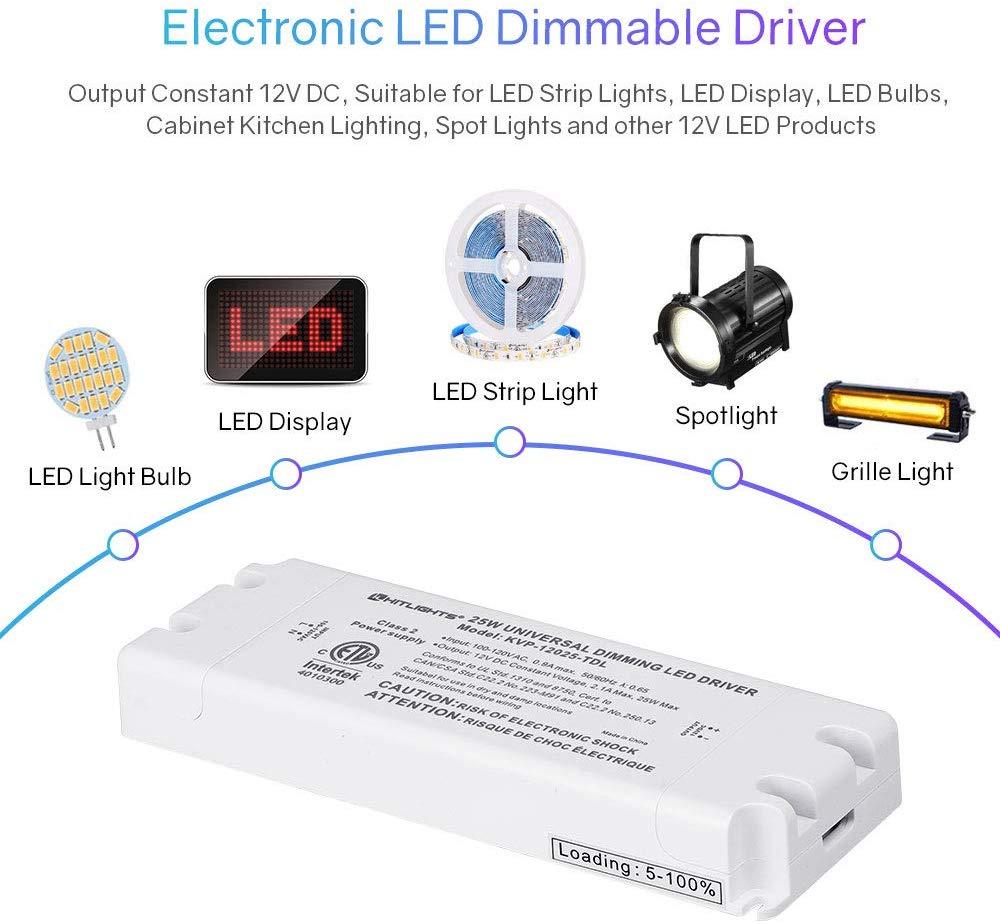
This 25 watt U-Series universal dimmable LED driver from HitLights supplies regulated 12V DC power for single-color 12V LED strip lights from a 120V AC circuit. It is designed as a Class 2, ETL-listed driver with integrated protection against short circuits, overloading and over-temperature conditions to help keep low-voltage lighting projects safe.
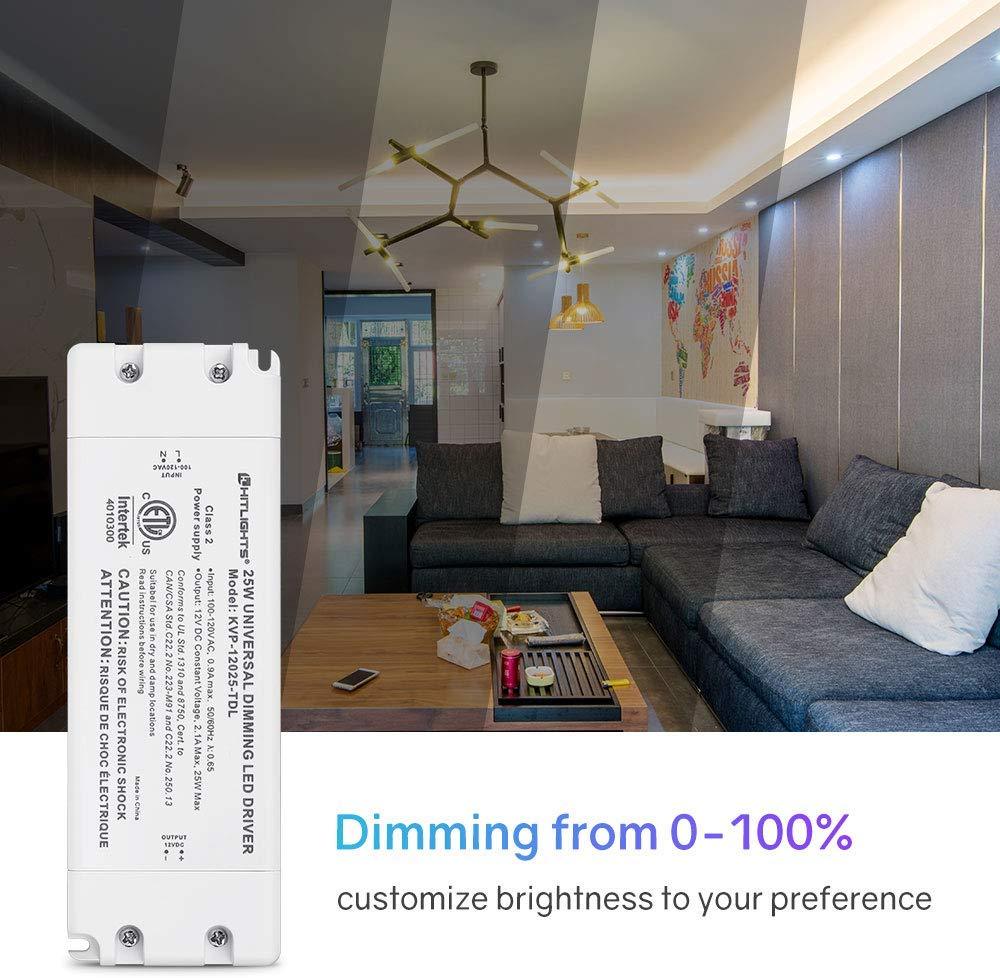
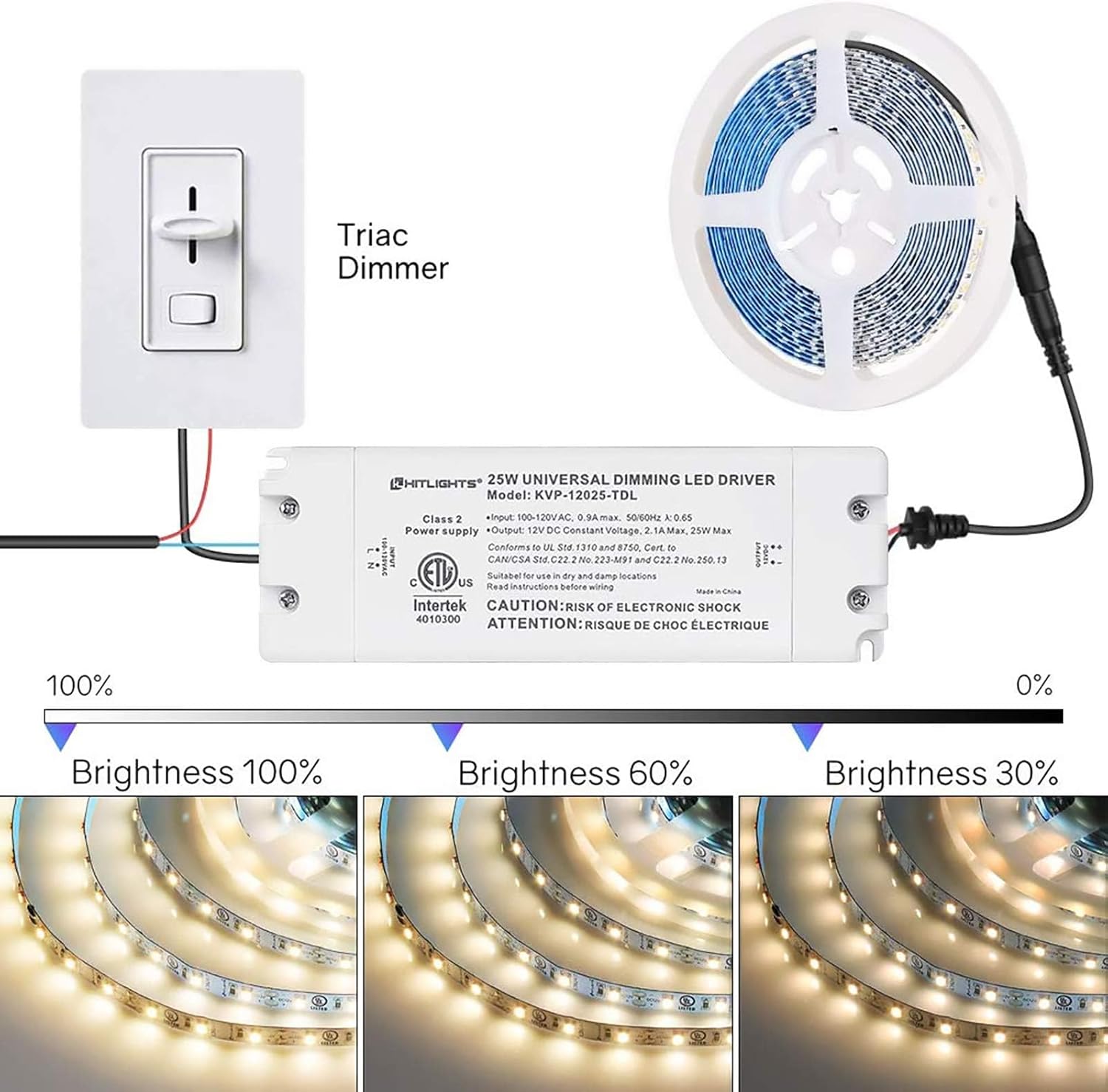
Universal dimming electronics support most forward phase, reverse phase, TRIAC, MLV and ELV wall dimmers, including popular models from Lutron and Leviton, enabling 0–100 percent brightness control at the wall instead of relying on inline knobs or handheld remotes. The driver converts 120VAC (108–132VAC, 47–63 Hz) to 12V DC at up to 25 watts, or 2.08 amps, sized for shorter runs of 12V strip lighting.
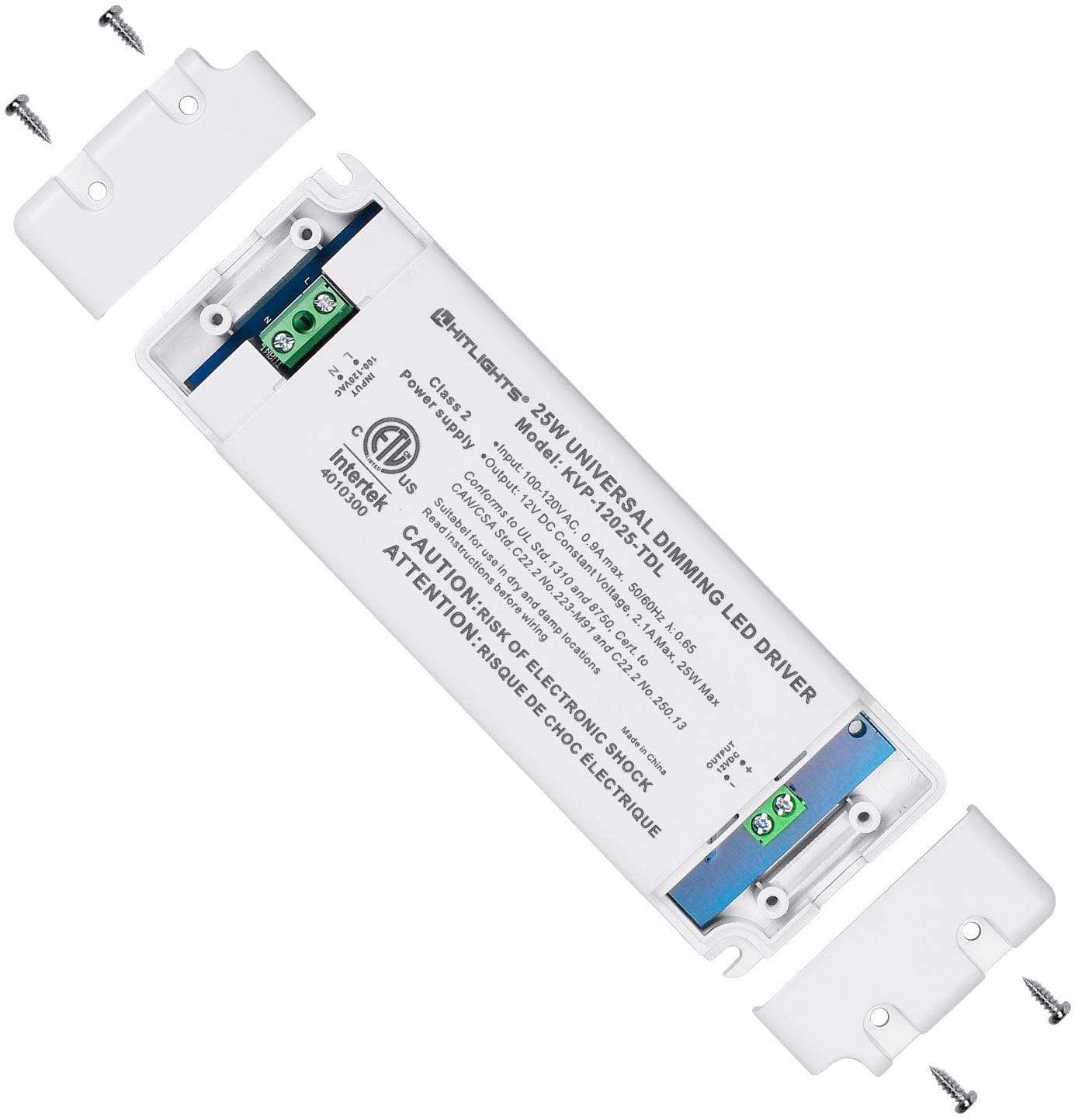
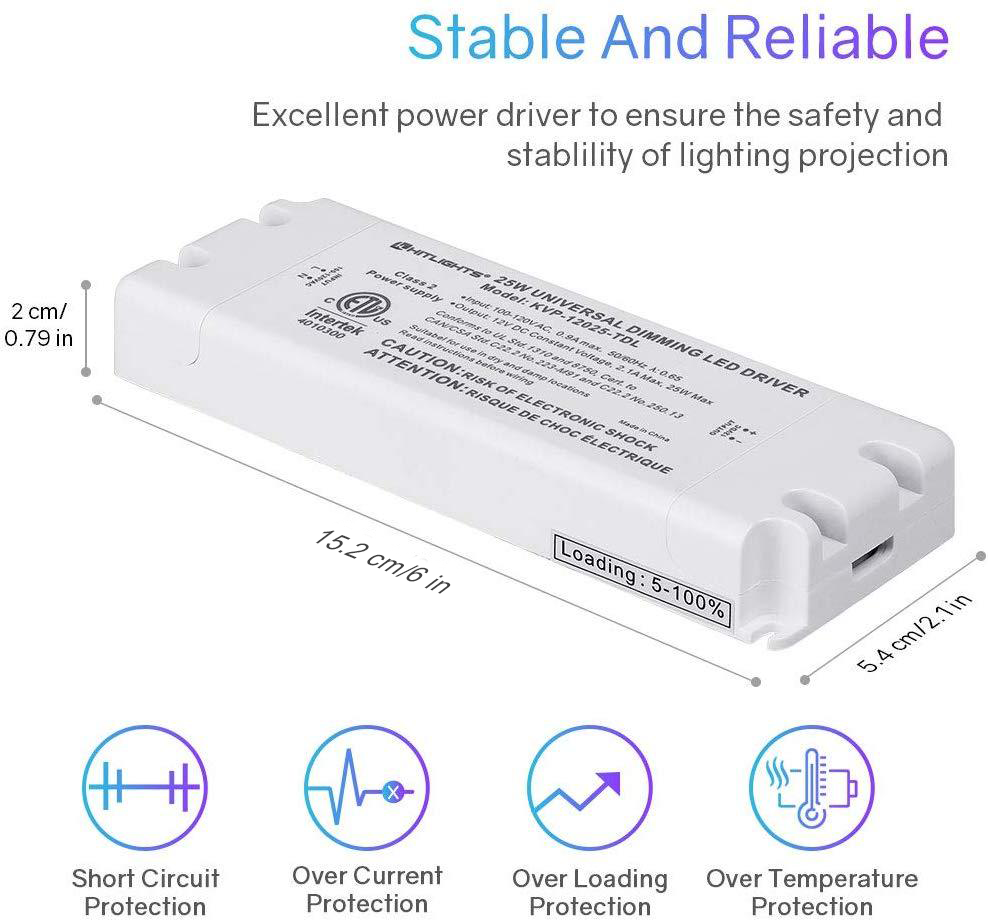
The U-Series enclosure uses bare wire connections on the low-voltage side and a removable AC power cord, making it easier to route wiring and complete electrical code-compliant installations. Dimensions of approximately 154 x 54 x 19 mm (6-1/16 x 2-1/16 x 13/16 inches) keep the driver compact enough for mounting in cabinets, valances, display cases, or utility spaces.
- 120V AC input to 12V DC, 25W (2.08A) Class 2 output
- 0–100 percent dimming range with compatible wall dimmers
- Built-in short-circuit, overload and over-temperature protection
- ETL-listed, Class 2 driver with a six-year warranty
Unlike plug-in adapters or non-dimmable power supplies, this universal dimmable driver is engineered for smooth LED dimming performance and broad dimmer compatibility. It suits indoor architectural lighting, under-cabinet runs, accent lighting and display projects where stable low-voltage output and reliable wall-dimmer control are required.
WHAT'S INCLUDED:
FREQUENTLY ASKED QUESTIONS:
Q: What is the HitLights 25W U-Series universal dimmable driver?
A: It is a 25 watt universal dimmable LED driver that converts 120VAC input to regulated 12V DC output for single-color 12V LED strip lights. The unit is ETL-listed, Class 2 and includes built-in electronic protections to support safe, low-voltage lighting installations.
Q: Who is this 25W dimmable LED driver designed for?
A: This driver is intended for electricians, contractors, lighting designers and advanced DIYers installing smaller runs of single-color 12V LED strips on standard 120V circuits. Its 25W capacity suits shorter under-cabinet, accent, shelf and display lighting projects where compact size and reliable dimming are priorities.
Q: How does the universal dimming work with wall switches?
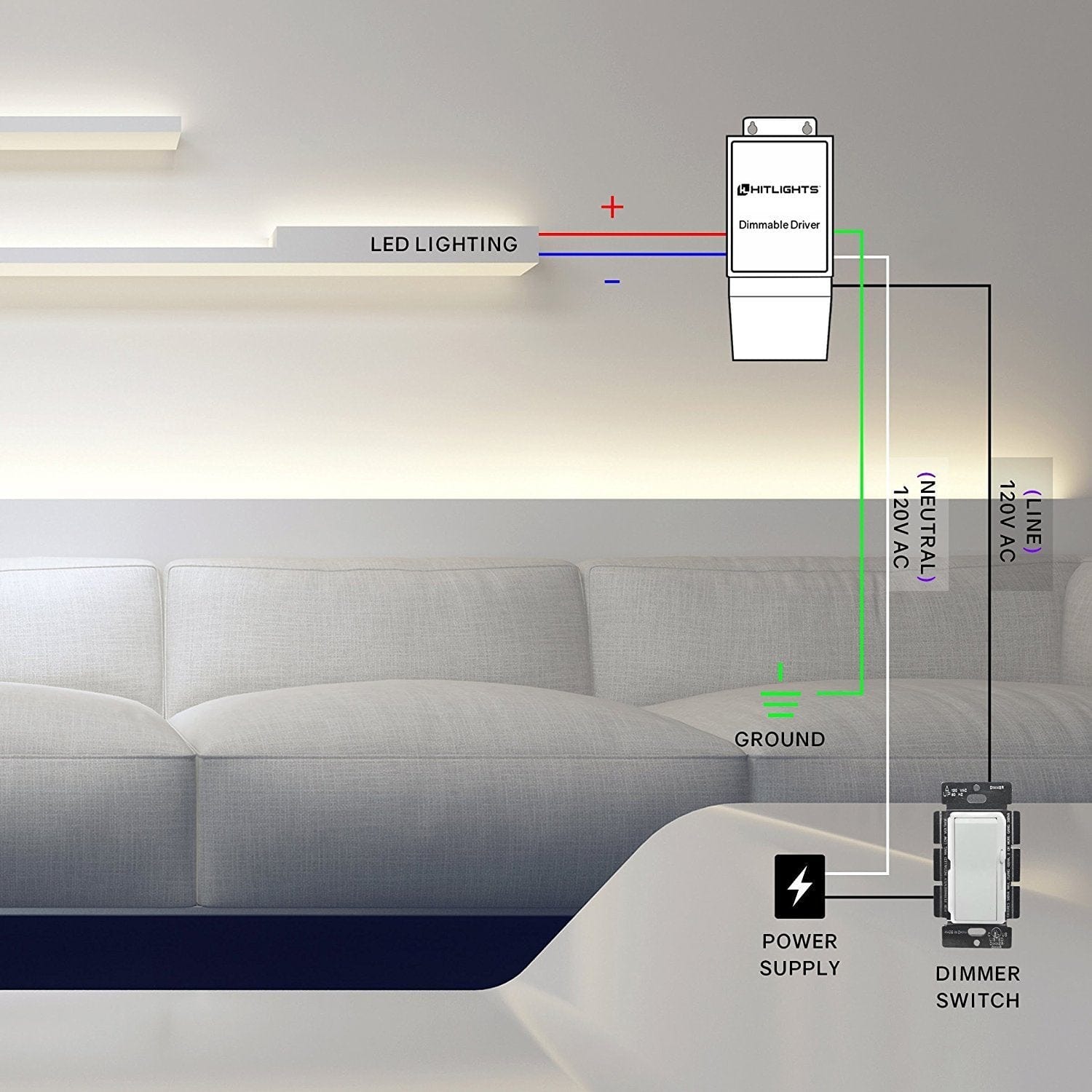
A: The driver connects to a compatible wall dimmer on the 120VAC side and delivers dimmed 12V DC power to the LED strips. Electronics inside the driver support most forward phase, reverse phase, TRIAC, MLV and ELV dimmers, enabling smooth 0–100 percent brightness control from the wall switch location.
Q: What are the key electrical and physical specifications?
A: Input is 120VAC (108–132VAC) at 47–63 Hz, and output is 12V DC up to 25W, or 2.08 amps, rated as a Class 2 circuit. The housing measures about 154 x 54 x 19 mm (6-1/16 x 2-1/16 x 13/16 inches), with bare wire connections for low-voltage wiring and a removable AC power cord.
Q: How does this driver compare to non-dimmable or plug-in power supplies?
A: Non-dimmable adapters are not designed to work with wall dimmers and often flicker or fail when dimmed. This U-Series driver is purpose-built for dimming, with universal dimmer compatibility, 0–100 percent range and integrated protections, giving more reliable, controllable output for permanent low-voltage lighting.
Q: What is included with the 25W U-Series driver?
A: The package includes the 25W U-Series universal dimmable LED driver with bare wire low-voltage leads and a removable AC power cord. LED strips, wall dimmers, junction boxes, connectors and mounting accessories are purchased separately to match the specific installation.
Q: How should this driver be installed and maintained?
A: The driver is hard-wired: line, neutral and ground on the input side, and positive and negative low-voltage leads on the output side. It should be installed by a qualified person, using appropriate enclosures and strain relief, and kept within its rated electrical and environmental limits. Periodic visual inspection helps confirm there is no damage or overheating.




![HitLights Single Color LED Light Strips Premium Luma5 LED Light Strip, Single Color (UL-Listed) 16.4 Feet- Standard Density [IP-30]](http://hitlights.com/cdn/shop/files/premium-luma5-led-light-strip-single-color-ul-listed-16-4-feet-standard-density-ip-30-hitlights-3736321130575.jpg?v=1698903908&width=1000)
![HitLights Single Color LED Light Strips Premium Luma5 LED Light Strip, Single Color (UL-Listed) 16.4 Feet- Standard Density [IP-30]](http://hitlights.com/cdn/shop/files/premium-luma5-led-light-strip-single-color-ul-listed-16-4-feet-standard-density-ip-30-hitlights-3736321228879.jpg?v=1698903911&width=1000)

